
Did you know Wussten Sie schon
Did you know …
Forty-eight questions about the history of the United States and the German traces running through it. Open any one of them and the answer appears below.
The questions
… that the famous Woodstock festival of 1969 did not take place in Woodstock?
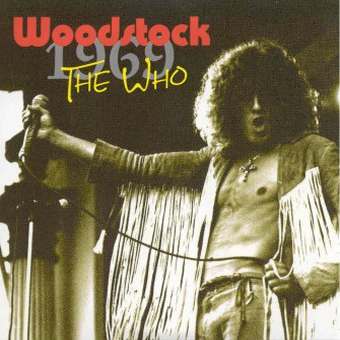
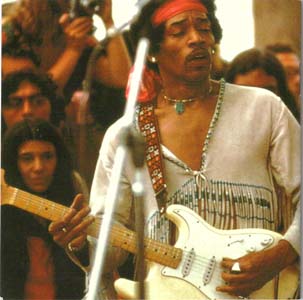
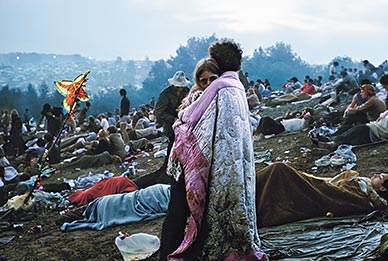

Woodstock in the Catskills lies about 100 miles north of New York City and had been an artists' colony since the early twentieth century. Bob Dylan lived there, and other musicians had settled in the area as well. The promoters Michael Lang, Artie Kornfeld, John Roberts and Joel Rosenman wanted to build a recording studio in Woodstock and to mark its opening with a rock festival and an arts fair. The studio was never built and the arts fair was forgotten. Since neither Woodstock nor neighbouring Wallkill would grant a permit, the Woodstock Music and Art Fair was held from 15 to 18 August 1969 on Max Yasgur's dairy farm in Bethel, some 55 miles southwest of Woodstock. The promoters kept the name for the sound of it.
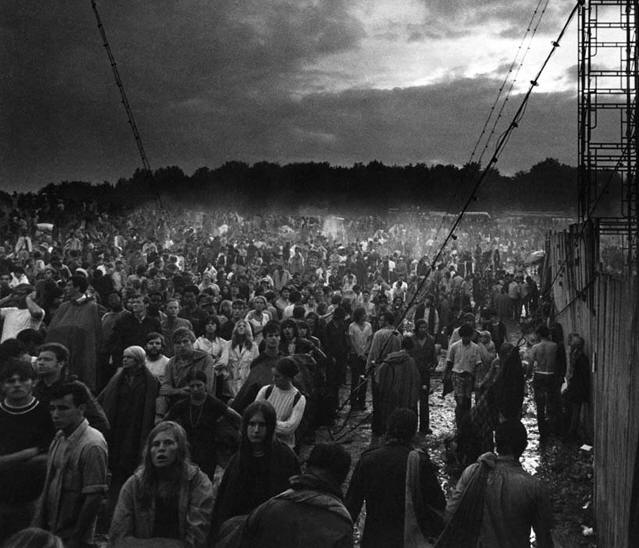
Thirty-two acts with 163 musicians in all took the stage, among them Jimi Hendrix, Janis Joplin and Santana. Bob Dylan, the best-known resident of Woodstock, did not play. The promoters had expected 50,000 visitors; by the usual estimates between 400,000 and 500,000 came. The result was chaos on a scale nobody had imagined. Roads were blocked, and even musicians arrived late or never arrived at all. Tickets could not be checked, so admission was effectively free. Heavy rain turned the pasture at Bethel into a field of wet clay.
Two people died, a seventeen-year-old run over by a tractor while asleep in his sleeping bag, and an eighteen-year-old whose cause of death is disputed to this day. A baby is said to have been born on the site. People who had never met before shared food, alcohol, drugs and partners. Within months Woodstock had become an American legend, through Abbie Hoffman's book "Woodstock Nation" and through the award-winning documentary "Woodstock", directed by Michael Wadleigh, on which Martin Scorsese worked as assistant director and as one of the editors. A wealth of stories and anecdotes surrounds that weekend and has lodged itself in the memory of an American generation. Woodstock was a magnificent musical event and, in hindsight, marks the high point of the American hippie and counterculture of the 1960s.
… who is credited with inventing the carport?
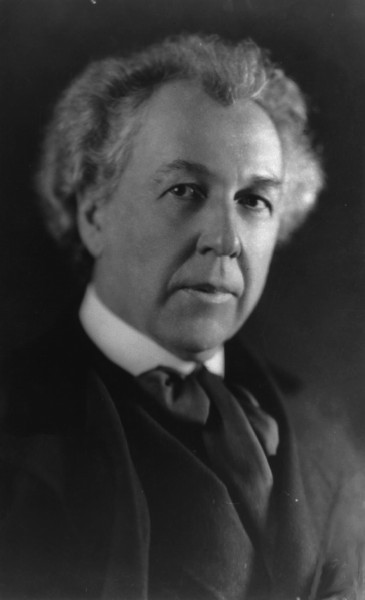
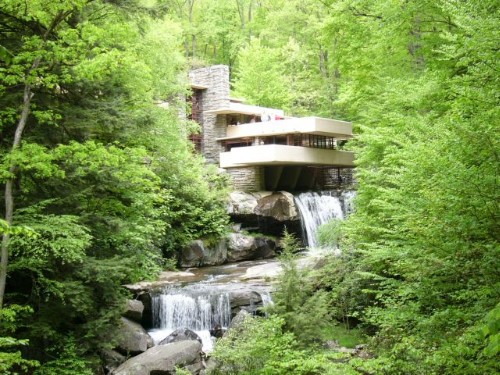
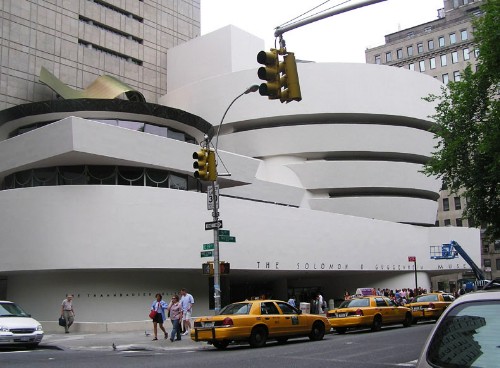
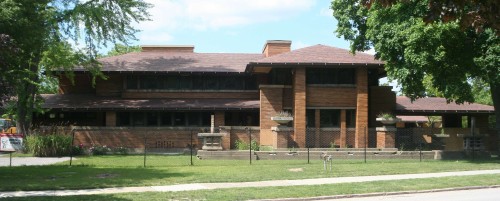
Frank Lloyd Wright (1867 to 1959), one of the most popular and successful architects in the United States, introduced a wealth of architectural innovations alongside his spectacular buildings. The best known of them is the roofed parking space, the carport, which he made standard in his Usonian Houses from 1936 onwards; the house he built for Herbert Jacobs in Madison, Wisconsin, is usually named as the first example.
Wright did receive commissions from large corporations, among them the Larkin Company administration building in Buffalo and the administration building and research tower for S. C. Johnson in Racine. Government commissions, on the other hand, almost entirely passed him by. Only with the Marin County Civic Center in California, his last commission, did he build for a public authority; the round post office there is his single commission for a federal facility. In Washington there is nothing of his to be seen. Along the two miles of the National Mall between the Capitol and the Lincoln Memorial, with all its museum buildings, not one is his, although no one worked harder than he did to develop a distinctly American way of building. His Washington project Crystal Heights failed before the planning authorities in 1939 and 1940.
… that women could vote in one American state from 1776 to 1807?
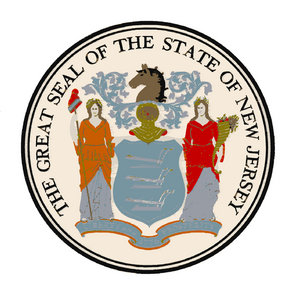
The first New Jersey State Constitution, adopted on 2 July 1776, recognised the right to vote for women and for black residents, provided certain property conditions were met. All adult inhabitants of the colony could vote if they were "worth fifty pounds proclamation money". This meant that all unmarried and widowed women, and black residents too, held the franchise if they had the required property. Married women did not, since under common law they could own nothing. The election law of 1790 spelled out "he or she", at first for seven of the thirteen counties and from 1797 for the whole state. In later elections the political camps accused one another of bringing ineligible women to the polls as "petticoat electors".
On 16 November 1807 the New Jersey legislature passed an act that described itself as a clarification of the true meaning of the constitution of 1776. From then on the vote belonged only to free, white, male citizens of the state, at least 21 years old and worth fifty pounds proclamation money clear of debt. The property threshold therefore remained in place. Women, free black residents and non-citizens lost the vote through this act. The trigger was an openly rigged referendum in Essex County, behind which lay the shift of power to the Jeffersonian Republicans, who found the largely Federalist-voting women politically inconvenient. Full clarity came only with the second New Jersey State Constitution of 1844.
… how the Pledge of Allegiance came about?
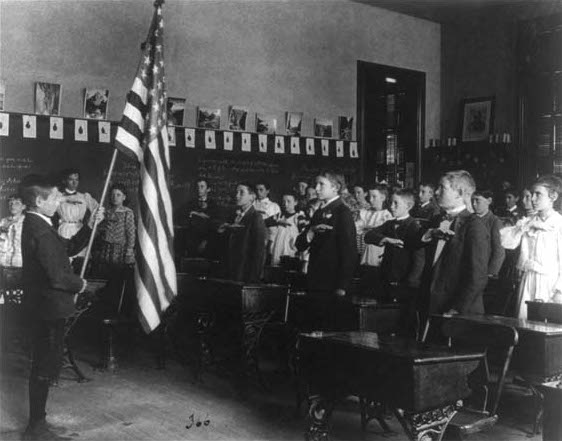
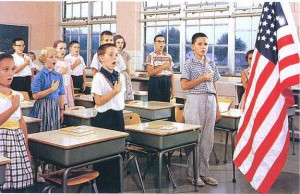
After the United States had worked through the aftermath of the Civil War and Reconstruction around 1890, the country turned back to national feats and national heroes, with Abraham Lincoln and Robert E. Lee now named side by side. In this mood the celebrations for the 400th anniversary of the discovery of America, Columbus Day on 12 October 1892, had been prepared for years. The pledge is credited to the Baptist minister Francis Bellamy, who worked for the magazine "The Youth's Companion" and served on a national committee preparing the celebrations. It was first published in that magazine on 8 September 1892. A month later millions of schoolchildren across the country recited it for the first time.
Even so it took many years for the pledge to become known beyond the schools. Only on 14 June 1923, Flag Day, did it reach a wider public at the first National Flag Conference in Washington D.C. On that occasion the words "to my Flag" were replaced by "to the Flag of the United States", and a year later extended to "to the Flag of the United States of America". The most recent change came on 14 June 1954, again on Flag Day, when President Dwight D. Eisenhower approved the addition of "under God". The pledge today reads: "I pledge allegiance to the Flag of the United States of America, and to the Republic for which it stands, one Nation under God, indivisible, with liberty and justice for all."
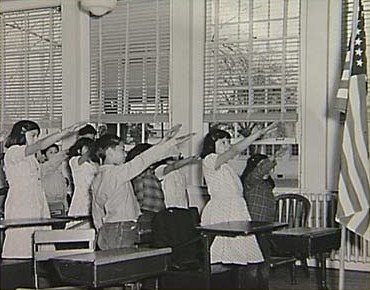
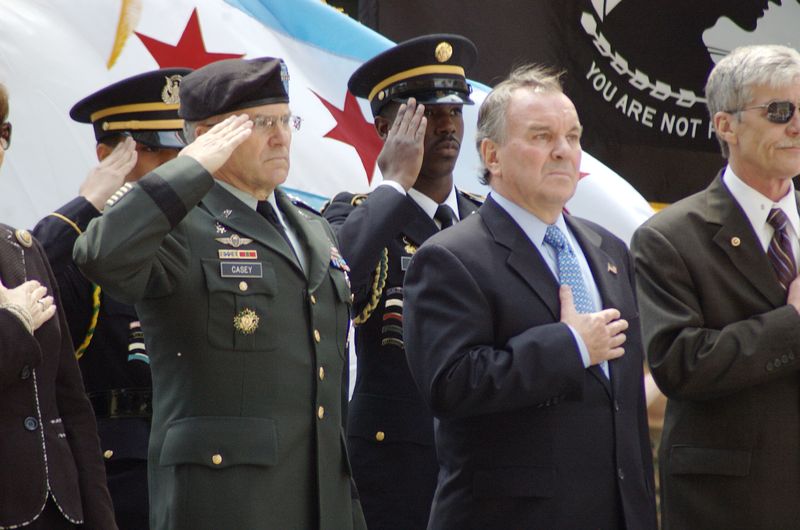
From the beginning there was a salute that went with the pledge. In 1892 the right arm was extended towards the flag; accounts differ on how the palm was held. Shortly afterwards the ceremony began with the right hand over the heart, and at the words "To the Flag" the right arm was extended towards the flag. After the outbreak of the Second World War the resemblance of this salute to the Hitler salute was felt to be too close, so from then on the right hand stayed over the heart throughout.
The pledge gained popularity with the patriotism of the war. It became official on 22 June 1942, when Congress incorporated it into the law on the flag of the United States, then Title 36 and today Title 4 of the U.S. Code. Sessions of Congress open with the pledge, as do many events held by state and local authorities and many private occasions. It is also recited in almost every school at the start of the school day, although the Supreme Court has repeatedly held that pupils can neither be compelled to recite it nor punished for refusing.
… that the largest public power utility in the United States is a nonprofit corporation owned by the federal government?
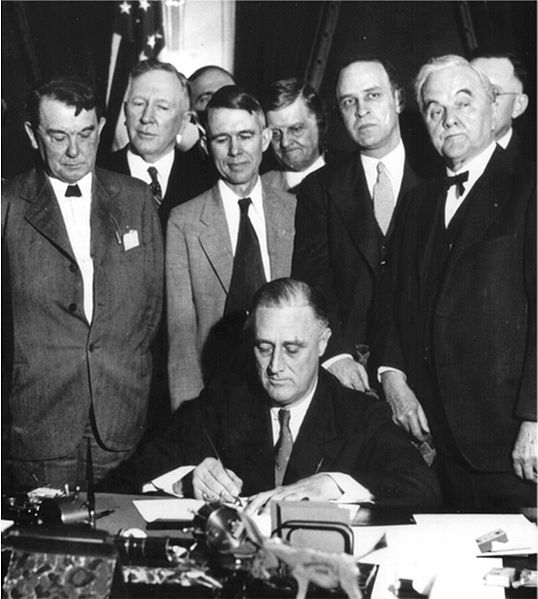
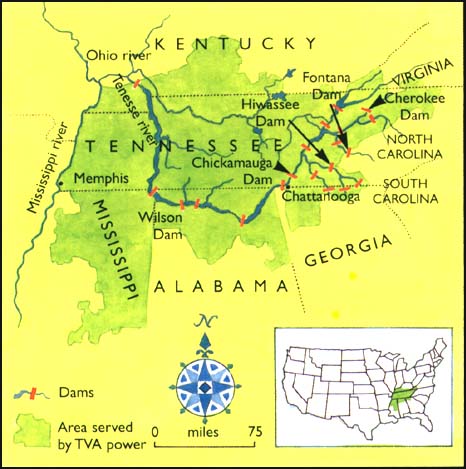
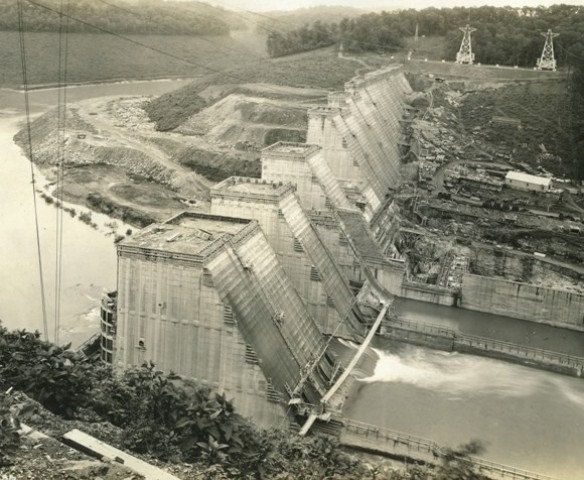
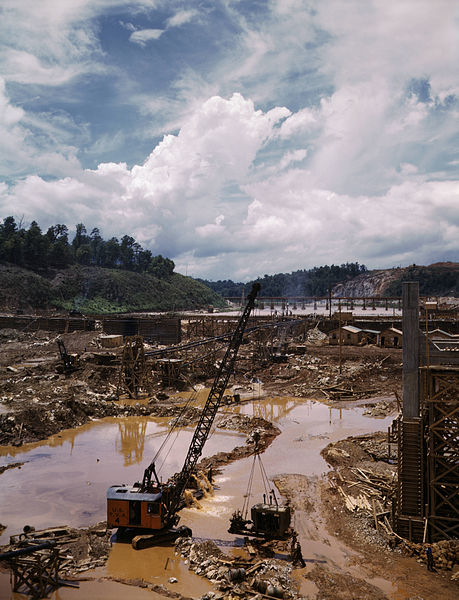
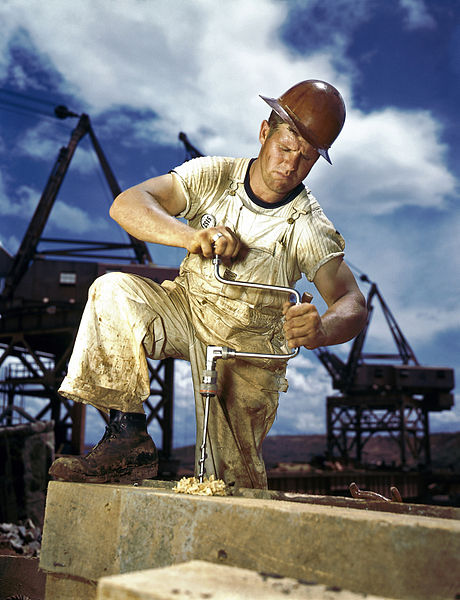
The Tennessee Valley Authority, the TVA, was one of the most inventive ideas of the New Deal for overcoming the Depression of the 1930s under President F. D. Roosevelt. The institution turned out to matter far more than it appeared to at first glance, when its task looked like simply improving living conditions in the valley of the Tennessee River, which were unusually poor even by the standards of the general Depression. Roosevelt called for an agency of an entirely new kind. On his proposal Congress was to create a corporation clothed with the power of government but possessed of the flexibility and initiative of a private enterprise. On 18 May 1933 Roosevelt signed the TVA Act passed by Congress.
The TVA was not only meant to supply power. It was also to act as a regional agency for economic development, using federal experts and above all electricity to modernise the economy of the region in the shortest possible time, while paying attention to conservation. There was opposition to the TVA model from the outset. A coalition of conservatives in Congress ended the New Dealers' dream of setting up further bodies like it across the country, among them a Columbia River Authority. The criticism ran on two lines: that such institutions were socialism, and that they enjoyed unfair advantages over competing private firms because they were under no obligation to make a profit.
In 1936 the Supreme Court decided in Ashwander v. TVA that the federal government was entitled to sell the surplus power generated at Wilson Dam. The dam had been built during the First World War for national defence and for navigation, both of them undisputed federal responsibilities, and the government may dispose of its own property. The constitutionality of the TVA Act as a whole was not decided by that judgment.
Today the TVA finances itself entirely, above all through the sale of electricity. In fiscal year 2025 its revenue stood at 13.7 billion dollars. Around 11,000 employees supply some 10 million people in parts of seven southeastern states with power at prices below the national average, mostly by way of 153 municipal and cooperative distributors. The TVA remains the largest public power utility in the United States. Its generating fleet includes three nuclear plants, four coal plants, around 17 gas plants, 29 hydroelectric plants, a pumped storage plant and several solar installations. The Kingston and Cumberland coal plants had been slated for retirement; in February 2026 the board reversed those plans and decided to keep them on the grid.
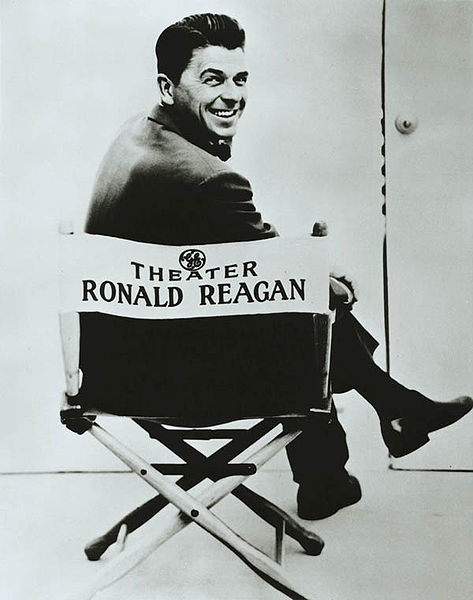
The TVA is regarded as a success story and is very popular with the people of the region. One small tale links the TVA to politics: Ronald Reagan had been advertising through the television programme General Electric Theater since 1954 and grew wealthy on it. In 1962 General Electric dismissed him. The TVA was a major buyer of GE turbines, and Reagan had said in public that the TVA was one of the problems of an overly large government.
… that Washington DC looks older than it is?
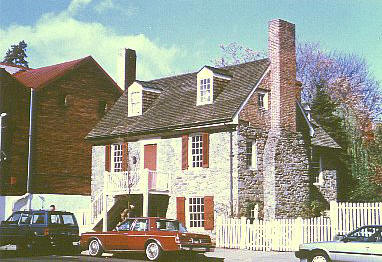
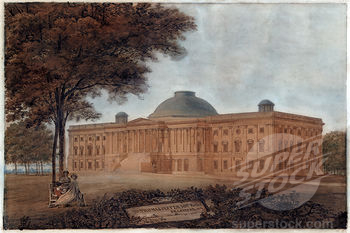
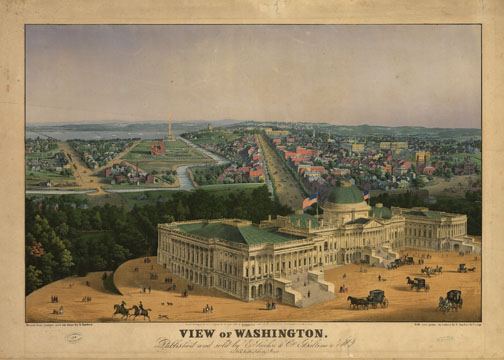
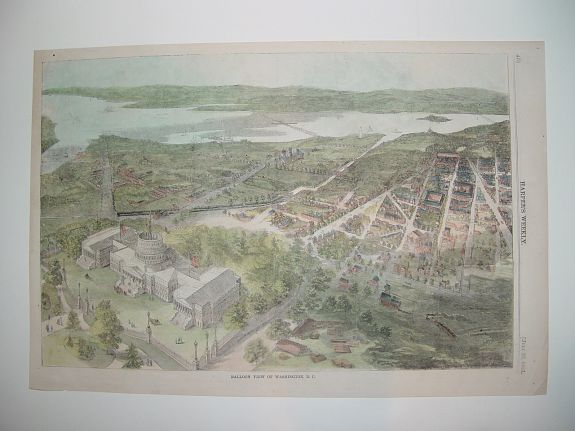
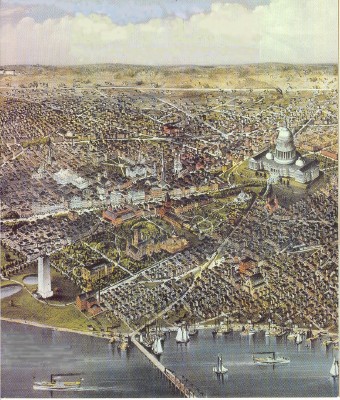

Georgetown was founded in 1751 by the Maryland assembly as a port on the Potomac. It was not the first settlement on the river: Alexandria on the Virginia side dates from 1749, and both later belonged to the District of Columbia. Looking for a permanent seat of government, George Washington was given authority to choose the site by the Residence Act of 16 July 1790, and in January 1791 he settled on an area of meadow and marsh near Georgetown. Philadelphia remained the temporary capital until 1800. In 1791 the District of Columbia, originally a square ten miles by ten, was carved out of the states of Virginia and Maryland and thus took in the towns of Georgetown, Washington and Alexandria on both banks of the Potomac.
After early ideas from Thomas Jefferson, who proposed a grid for the new capital, Pierre Charles L'Enfant presented a late baroque plan with broad boulevard axes and generous open spaces. He was dismissed as early as 1792 after a fierce quarrel with President George Washington and disappeared, taking many of his drawings with him. The surveyor Andrew Ellicott, appointed in his place, altered L'Enfant's plans considerably. The White House came out smaller than planned; L'Enfant had envisaged a palace roughly five times the size of the building we know. For much of the nineteenth century Washington DC remained unimpressive, as Charles Dickens noted after a visit in 1842. Because the city grew so slowly, the return of Alexandria County to Virginia was agreed in 1846 and carried out in 1847; in 1920 the remainder, without the city of Alexandria, was renamed Arlington County.
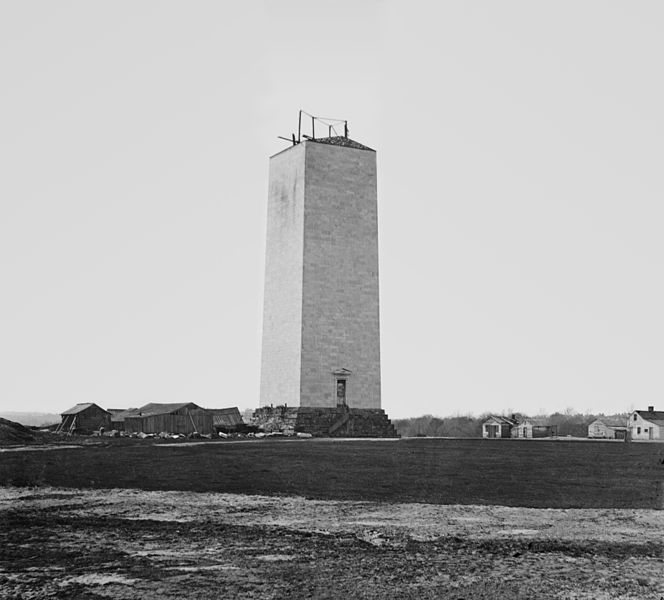
The Capitol was built in a first phase from the laying of the cornerstone on 18 September 1793 until 1826, and enlarged between 1851 and 1863 by the two wings and the cast-iron dome. Work on the Washington Monument ran from the cornerstone of 4 July 1848 to 6 December 1884 and was interrupted again and again by lack of money, by a quarrel over stones donated by Pope Pius IX and by the Civil War. The design of the Mall rests on the McMillan Plan of 1901 and 1902, carried out into the 1930s, after a railway station west of the Capitol, a market hall and greenhouses had stood there through the nineteenth century.
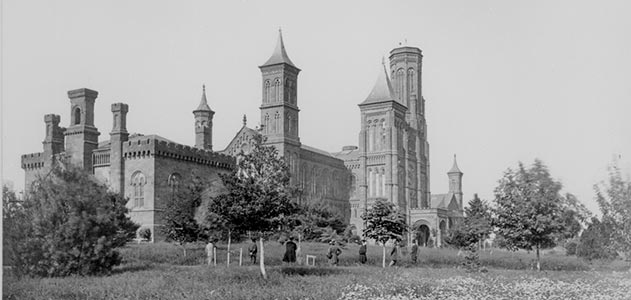
The neo-Romanesque Smithsonian Castle almost looks like a stranger on the Mall today. It was built between 1847 and 1855 to a design by James Renwick Jr. and restored by Adolf Cluss after the fire of 1865. The Lincoln Memorial was dedicated in 1922, the Supreme Court Building erected between 1932 and 1935. For the Jefferson Memorial, Congress appointed a commission in 1934, funds followed in 1938, and the dedication took place on 13 April 1943. The architect who shaped the classical face of the city was John Russell Pope (1874 to 1937), whose best-known works are the National Archives, the West Building of the National Gallery of Art on the Mall and the Jefferson Memorial, completed only after his death.
… what a muckraker is?
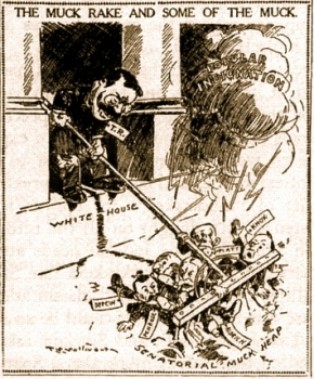
The period between the end of the nineteenth century and the American entry into the First World War in 1917 is usually called the Progressive Era. Three concerns drove it. One was the perceived corruption and inefficiency of government and the need for a thorough reform of the political system, above all in the cities but in the states as well. A second was the regulation and control of big business, the growing unease about the vast new trusts that had formed in the wake of ever faster industrialisation after the Civil War; these trusts were to be broken up or at least strictly regulated. A third was the urban poor, the working and living conditions in the slums and above all the acute problem of child labour.
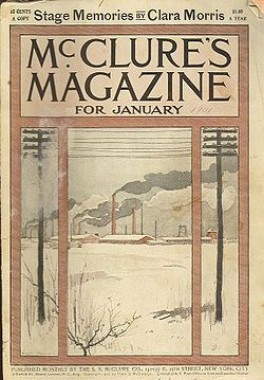
A new kind of journalism, beginning as early as the 1880s, helped to make the movement popular. Over the years this literature grew both more frequent and more aggressive. In October 1902 the New York magazine McClure's began Lincoln Steffens' series on corruption in city politics, followed in November by Ida Tarbell's series on Standard Oil. The stir these articles caused moved the publisher S. S. McClure to write a pointed editorial in the January 1903 issue. Something seemed fundamentally wrong with the American character, he wrote. A great many American employers, workers and politicians were behaving in a deeply immoral way, lawyers were becoming tools of the great corporations, judges were helping criminals evade justice, and so on. "We are all doing our worst and making the public pay," he concluded.
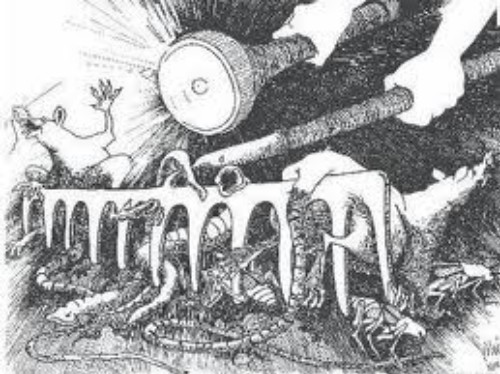
The piece was felt to be a sensation and drew unusually wide attention. An army of writers soon filled newspapers and magazines with abuses in insurance, in the pharmaceutical industry, in college sports, in prostitution, in party politics and in a host of other organisations. On 14 April 1906 this kind of writing led President Theodore Roosevelt to compare such journalists to the man with the muck rake in "The Pilgrim's Progress", John Bunyan's Christian allegory of 1678. Roosevelt's reading did not do justice to the literature of exposure, yet the label muckraking stuck to it from then on. The journalists concerned rejected the term at first; later generations turned it around and understood it as a title of honour.
… how the teddy bear got its name?
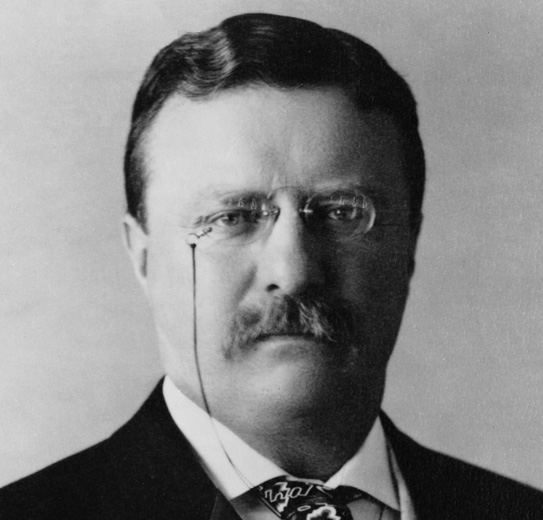
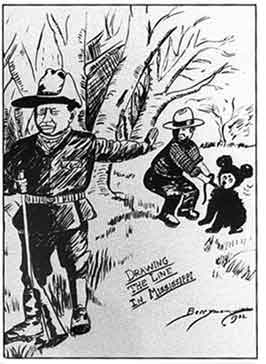

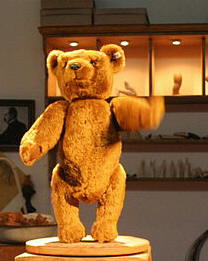
In November 1902 President Theodore Roosevelt, nicknamed "Teddy", joined a bear hunt near Onward in Mississippi. On 14 November the dogs of the guide Holt Collier cornered a full-grown black bear of some 220 pounds; Collier clubbed it down and tied it to a tree. Roosevelt refused to shoot the defenceless animal, but had his companions kill it because it was badly injured. The cartoonist Clifford K. Berryman turned the scene into the drawing "Drawing the Line in Mississippi", which appeared in the Washington Post on 16 November 1902. Inspired by the popularity of the cartoon, the Russian-born shopkeeper Morris Michtom and his wife Rose sewed a stuffed bear, put it in the window of their Brooklyn store and asked Roosevelt for permission to call it "Teddy's bear". The teddy bear was born. In 1907 the shop became the Ideal Novelty and Toy Company.
There is a German legend as well. In 1902 Richard Steiff developed the bear 55 PB, the first teddy bear with jointed limbs, and showed it at the Leipzig spring fair of 1903. An American buyer there ordered 3,000 of them for export to the United States. As the story goes, one such bear reached the wedding table of Roosevelt's daughter Alice by way of the president's secretary, at her wedding in the White House in February 1906, and was christened "Teddy" after her father. The story cannot be documented. What is documented is that Steiff used the name "Teddy Bär" officially from 1906 onwards.
… that equal rights for women are still not guaranteed in the US Constitution?
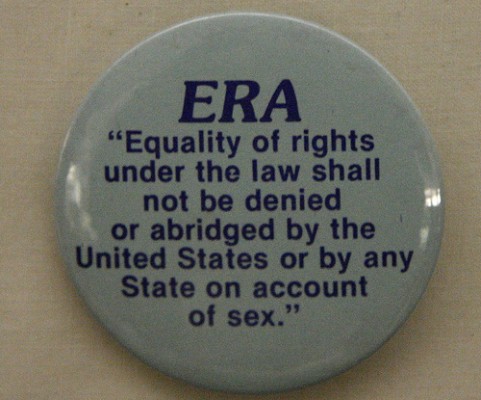
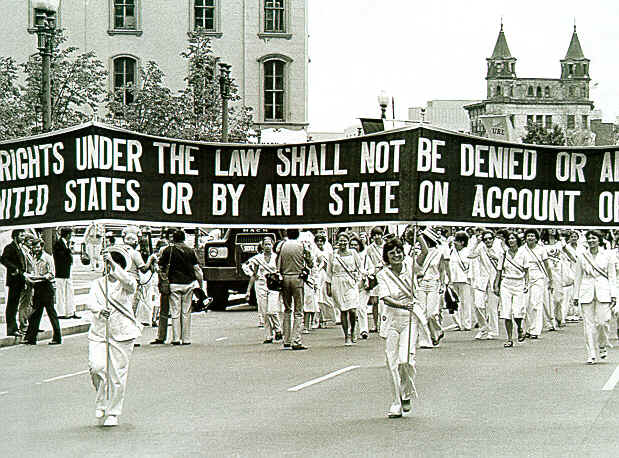
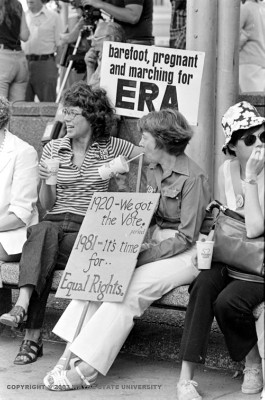
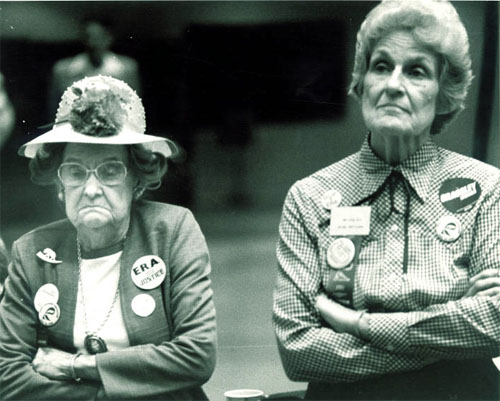
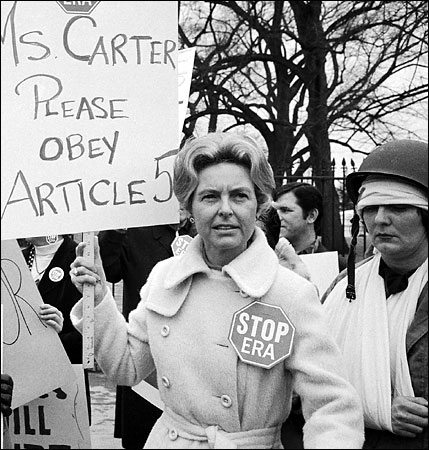
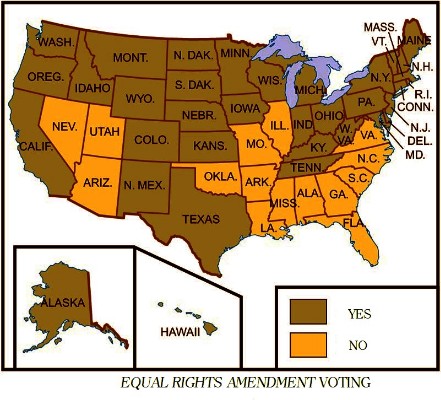
Although the Nineteenth Amendment of 1920 guaranteed women the vote and with it political equality, leading advocates of women's rights argued that this was not the end of the legal discrimination that remained. In 1923 the National Woman's Party drafted the Equal Rights Amendment (ERA) and submitted it to Congress, where it was first taken up as Senate Joint Resolution No. 21 on 10 December 1923 and as House Joint Resolution No. 75 on 13 December 1923. Although the ERA was introduced in every session of Congress between 1923 and 1970, it came to a vote in one of the chambers only three times, since it usually never made it out of committee. In 1946 the Senate rejected it by 38 to 35; in 1950 and 1953 the Senate passed it, but with an addition, the Hayden Rider, that would have rendered the amendment practically worthless.
In those early years the ERA was fiercely opposed by the American Federation of Labor and other unions, which feared that protective labour rules for women might be struck down. Similar reasoning led Eleanor Roosevelt and most New Dealers to oppose it. Opposition also came from most northern Democrats, who followed the unions, while support came from southern Democrats and from a majority of Republicans. Into the 1960s the most important support for the ERA came from wealthy conservative women.
A new women's movement of the 1960s, the National Organization for Women (NOW), demanded full equality and in February 1970 forced the Senate to take up the ERA by interrupting Senate committee hearings on other subjects. In August of that year millions of American women across the country held a Women's Strike for Equality, demanding full social, economic and political equality. Capitol Hill responded, and on 22 March 1972 the Senate approved the ERA, the House of Representatives having done so on 12 October 1971. The 92nd Congress thus sent the ERA to the state legislatures for ratification under Article V of the Constitution, with a time limit of seven years for reaching the three-quarters quorum required, that is, ratification by 38 states. At the end of that period, on 22 March 1979, only 35 states had ratified. An extension of the deadline to 30 June 1982 changed nothing.
This is often explained by the fact that the late 1970s were already dominated by the beginning of the conservative turn in the United States. The conservative writer Phyllis Schlafly became well known in these years for her long campaign against the ERA, in which she saw a threat to the traditional American family and the loss of certain female privileges such as exemption from military service or the claim to financial support from a husband. Even so, the ERA has been introduced in every session of Congress since 1982. In 1983 House committees approved it with the same wording as in 1972, but the floor vote fell six votes short of the two-thirds majority required. That was the last time the ERA reached a floor vote in Congress.
Nevada ratified the amendment in March 2017, Illinois in May 2018 and Virginia on 27 January 2020 as the 38th state. The number of 38 ratifications has thus been reached, though long after the extended deadline had passed. Five states, namely Nebraska, Tennessee, Idaho, Kentucky and South Dakota, had also withdrawn their consent in the 1970s. The Department of Justice concluded in 2020 and again in 2022 that the deadline set by Congress is valid and binding. On 28 February 2023 the Court of Appeals for the District of Columbia Circuit upheld the dismissal of a suit brought by Illinois and Nevada seeking to compel the National Archives to certify the amendment. On 17 January 2025 President Biden declared the amendment to be the law of the land as the Twenty-Eighth Amendment. The Archivist of the United States disagreed and stated that under the law as it stands she may neither certify nor publish it. The amendment is therefore still not part of the US Constitution.
… that in 1932 the US Army used force in Washington against veterans of the First World War?
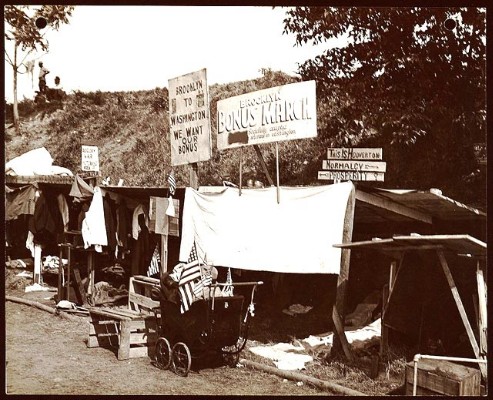
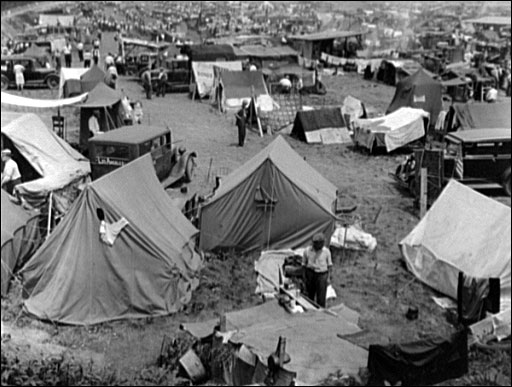
The Depression of the early 1930s led American veterans of the First World War to demand immediate payment of the compensation for their war service, which Congress had provided for by law in 1924 in the form of a fund and certificates payable in full in 1945. The difference between this final entitlement and the partial amounts already paid out against it in the form of loans, set by law in 1931 at 50 per cent instead of the original 22.5 per cent, became known among the veterans and members of Congress as the bonus.
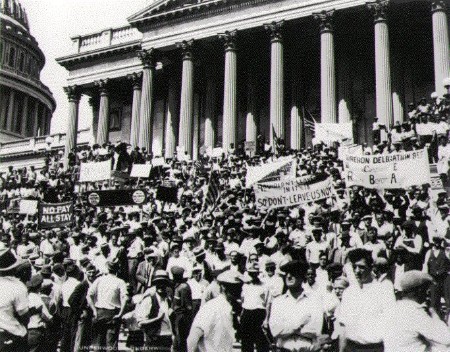
Expecting resistance to such legislation from President Hoover and from a number of senators and representatives, veterans' groups all over the country organised a march on the capital from May 1932 onwards to press their demands. That journey, difficult for most of them, became known as the Bonus March of the Bonus Expeditionary Force. By mid-June some 20,000 people had arrived in Washington, veterans together with family members and supporting groups, and camped, often in dirty and unhealthy conditions, in parks and camps on the edge of the capital, dependent on donations of food and other goods from a range of organisations, churches and private citizens.
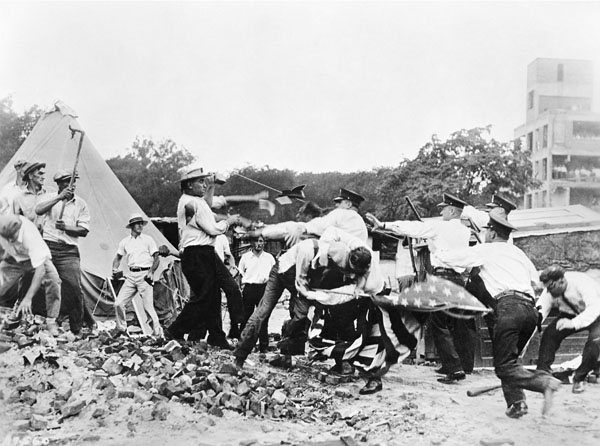
On 15 June 1932 the House of Representatives passed a bonus bill along the lines the veterans wanted, but the Senate defeated it on 17 June. Throughout July the veterans continued to hold marches and rallies in the capital, despite ultimatums from the White House to leave the city in order to avoid the use of force. On 28 July 1932 Attorney General Mitchell ordered the police to clear the Bonus Army out. During that operation two policemen defending themselves against an advancing crowd opened fire and fatally wounded two veterans. On hearing the news President Hoover ordered the army to remove the veterans.
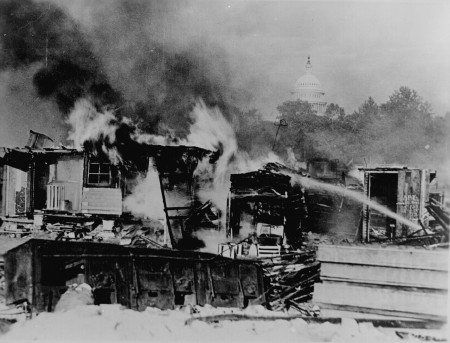
On the afternoon of 28 July, around 4.30 pm, an infantry regiment and a cavalry regiment formed up on Pennsylvania Avenue under the command of General Douglas MacArthur, supported by six tanks under Major George S. Patton. Thousands of office workers left their desks to watch. At first the veterans believed the army had turned out in their honour and cheered the soldiers, until Major Patton ordered the cavalry to charge, which the watching crowd answered with cries of "Shame, shame". After the cavalry charge the infantry attacked with fixed bayonets and used a war gas containing arsenic that induced vomiting, driving the veterans and their families out of the camps. Once they had fled across the Anacostia River to the main camp, President Hoover ordered the attacks stopped. General MacArthur, however, was convinced that the veterans' actions amounted to a communist attempt at revolution, disregarded the president's order and called for a further assault. Fifty-four veterans were injured and 135 arrested; a further participant in the protests is said to have been fatally injured. During the army operation the future president Dwight D. Eisenhower, then an army major, acted as MacArthur's liaison officer and kept in contact with the city police.
In the months that followed only a few veterans' groups tried to keep up the pressure on Congress, and in May 1933 some 3,000 veterans marched on Washington once more. The newly elected President F. D. Roosevelt also refused a bonus payment, but he showed his concern for the unemployed veterans by ordering that 25,000 of them be taken on for forestry work in the Civilian Conservation Corps, an agency of the New Deal. Once the veterans had realised that President Roosevelt too would veto the bonus bill, while offering alternatives to ease their situation, they gradually let their demands drop, and the subject disappeared from the news. In 1936 Congress finally passed the Adjusted Compensation Payment Act over a presidential veto, authorising the immediate and final payment of two billion dollars to the veterans of the war.
… that Thomas Jefferson, the third President of the United States, visited Germany?
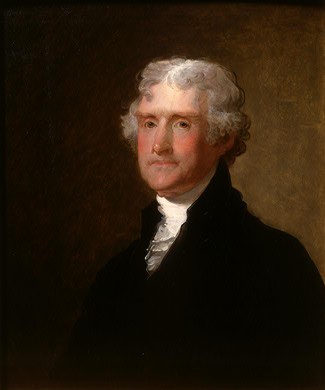
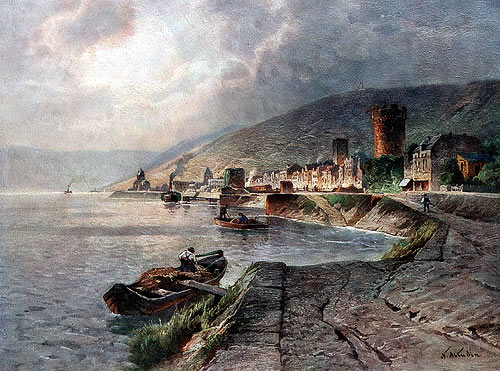
Thomas Jefferson, one of the most influential political thinkers of the United States and the principal author of the Declaration of Independence, served from 1785 to 1789 as the young republic's minister to France before becoming the third President from 1801 to 1809. During those years the wine lover made several journeys, among them one in April 1788 along the Moselle, the Rhine and the Neckar, on which he came to appreciate the wines of the Rheingau in particular. In Frankfurt he stayed at the inn "Zum Roten Haus", kept by John Adam Dick, and there tasted a Hochheimer of the 1726 vintage. Afterwards he had the vineyards of Hochheim, Rüdesheim and Johannisberg shown to him, together with his friend and travelling companion Baron de Geismar, and sampled what they produced.
He was especially taken with a wine he called "Hock". "You may taste at their tavern genuine Hock and one of the oldest," he is said to have remarked, meaning by "Hock" the wine of the country around Hochheim. Before leaving Hochheim on 10 April 1788 he bought 100 vines for his garden in Paris, plainly with the intention of shipping them on to Monticello in Virginia, for Jefferson wrote from Paris to his friend Geismar that his journey to Germany had been a success, that the vines from Hochheim and Rüdesheim were thriving in his garden and that he intended to send them across the Atlantic the following winter. Whether the vines ever reached Monticello is unclear, for when Jefferson set out in September 1789 for a six-month leave in the United States, he could not know that he would never return to Europe. Washington appointed him Secretary of State, and before becoming President himself he served from 1797 to 1801 as Vice President under John Adams. The journey is recorded in James Gabler's book "Passions: The Wines and Travels of Thomas Jefferson".
… that in its first years the United States had no office of president at all?
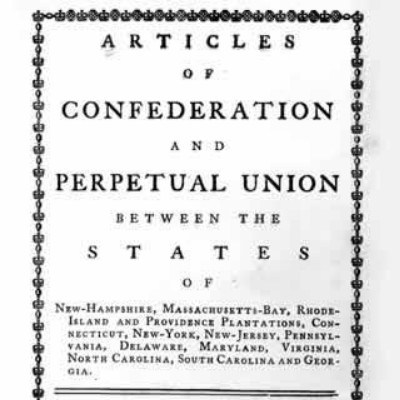
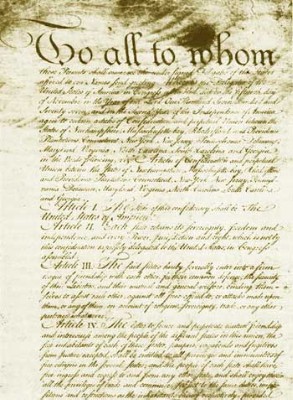
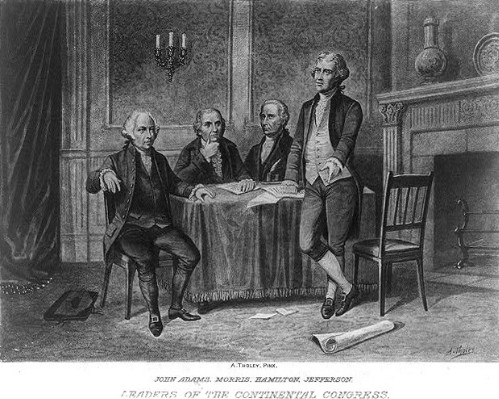
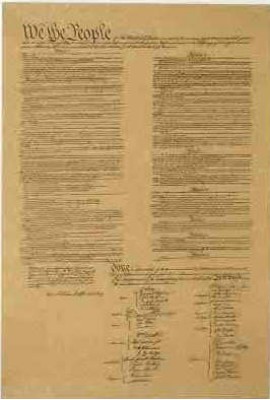
The first constitution of the young United States, the Articles of Confederation, existed in draft as early as July 1776. Maryland's legislature authorised its delegates to agree in early February 1781, the Articles took effect on 1 March 1781, and they remained in force until 1789. This constitution provided for a single organ of power, a Congress in which each of the thirteen states had one vote. There was no separate executive. Congress merely chose a presiding officer from among its own members, who bore the title President of the United States in Congress Assembled, chaired the sessions and served for no more than a year. No governing power went with the office. There was no separate judiciary either.
The powers of this central government were limited to declarations of war, treaties and alliances with foreign powers, the apportionment of common expenses among the individual states, coinage, the postal service and the regulation of Indian affairs. Two essential powers were missing, the right to levy taxes and the right to conduct trade policy. All rights not expressly assigned to the central government remained with the states. The deep-seated American fear of a strong central government and of an executive power going beyond the already weakened state executives was surely the reason for this constitution.
The inadequacies soon became clear. In foreign affairs the near absence of a central government encouraged Britain and Spain to ignore parts of the settlement of the War of Independence in the wide territories of the west and southwest. The individual states treated the interests of the United States as secondary and looked first to their own affairs. They named delegates to Congress only reluctantly, or not at all. Only with difficulty could enough members be assembled to ratify the Treaty of Paris in 1783. What proved most damaging was the loss of standing suffered by this Congress through the mounting problems of the confederation's finances and currency. The collapse in value of the paper money issued at the end of the War of Independence eventually led to unrest, notably Shays' Rebellion of 1786 and 1787 in Massachusetts, where the indebted and bankrupt farmer Daniel Shays was able to lead some 1,500 armed men against the state arsenal at Springfield; the attack came on 25 January 1787.
All this led to a growing recognition that a stronger central government was necessary for the survival of the state. Although at first only a revision of the Articles was intended, 55 delegates at the Philadelphia Convention, chaired by George Washington, worked out an entirely new constitution between May and September 1787, the Constitution in force today; 39 of them signed it. After ratification by nine of the thirteen states the electors cast their votes on 4 February 1789, Congress counted them on 6 April, and on 30 April 1789 George Washington was sworn in as the first President of the United States.
… that national Prohibition was part of the American Constitution for almost fifteen years?
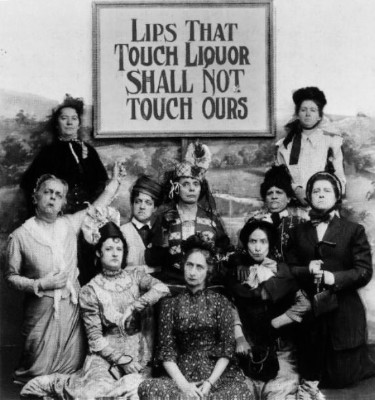
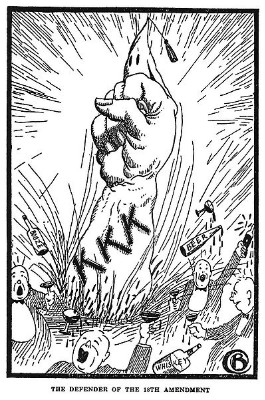
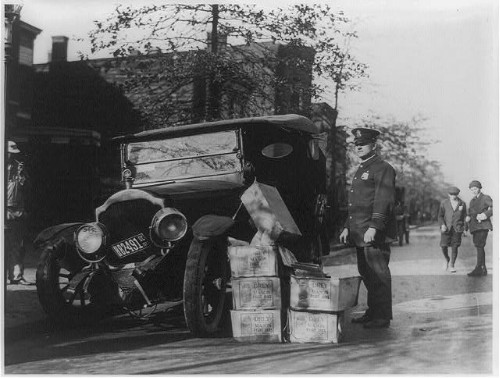
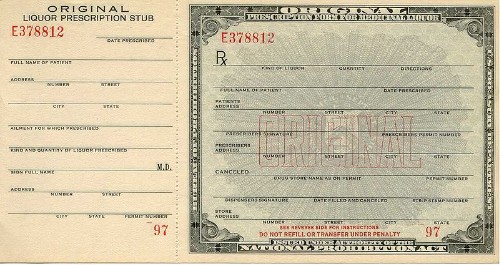
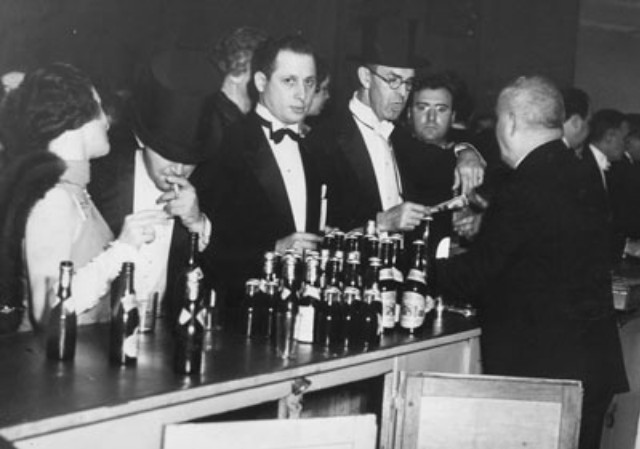
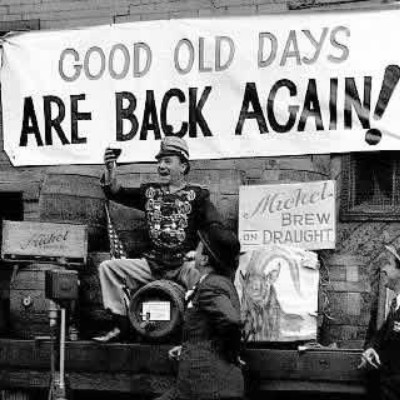
German immigrants played no small part in the second half of the nineteenth century in the sharp rise in the drinking of beer, and of other alcohol too, in the ever more numerous saloons. As the saloons increasingly became centres of gambling and prostitution, resistance grew stronger against them and against the consumption of alcohol in general. In 1893 the Anti-Saloon League was founded in Oberlin, Ohio, and with the support of the Prohibition Party, founded in 1869, and of the Woman's Christian Temperance Union it very quickly found broad support across the country. The spirit of the Progressive Era, with its partly puritan urge to improve society and the economy, encouraged prohibitionist views. By 1916 Prohibition had been introduced in 23 states.
The increased demand for foodstuffs during the First World War sharpened public pressure. What entered the Constitution was the Eighteenth Amendment: Congress passed it on 18 December 1917 and submitted it to the states. It was ratified on 16 January 1919 and, by its own terms, took effect a year later, on 17 January 1920. A nationwide ban was possible only this way, since the regulation of the liquor trade was otherwise a matter for the states. What counted as a prohibited drink was settled only by the enforcing statute. The National Prohibition Act, named after Representative Andrew Volstead, drew the line at 0.5 per cent alcohol and set out how the ban was to be enforced. President Wilson vetoed it on 27 October 1919, Congress overrode him, and the act took effect on 28 October 1919.
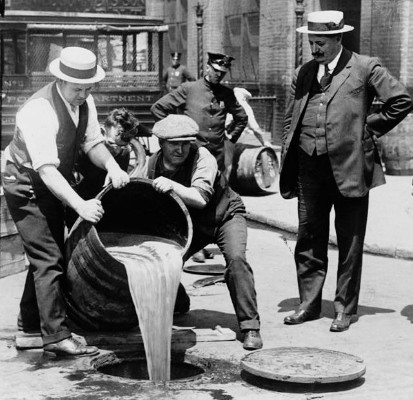
Effective public opposition to the "noble experiment" was hard to detect at first, although from the very beginning it was evaded with great ingenuity, and not only in the speakeasies, the disguised bars. Social change mattered too. The Progressive Era was over, and the new President Harding spoke of "normalcy" as the sign of the times. A new middle class grew ever more numerous in the expanding suburbs and tried to imitate the life of the wealthy, who for their part let Prohibition do nothing to limit their drinking. Sinclair Lewis captured this new business class and its way of life in his 1922 novel "Babbitt". Newer studies call it unlucky timing that Prohibition cut across the ambitions of this new business class with its sociable style of living. Having earlier helped bring Prohibition about, this class now saw in alcohol, made scarce by the ban, a mark of status. At the private parties of the Babbitts a new drinking culture developed, with "cheers" raised against a guilty conscience.
The growing criminality of the illegal trade finally brought Prohibition to an end. In the 1932 campaign the question of Prohibition mattered at least as much as the economic crisis. Keeping his campaign promise, President F. D. Roosevelt signed the Cullen-Harrison Act on 22 March 1933, which allowed beer of low alcohol content again from 7 April 1933. On 5 December 1933 the Twenty-First Amendment took effect, repealing the Eighteenth. The ban on alcohol had lasted just under fourteen years, the constitutional amendment itself almost fifteen.
… that the oldest continuously inhabited European settlement in what is now the United States was founded by Spaniards?
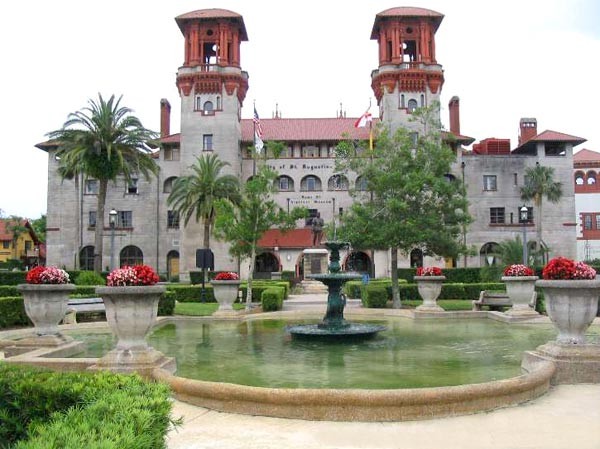
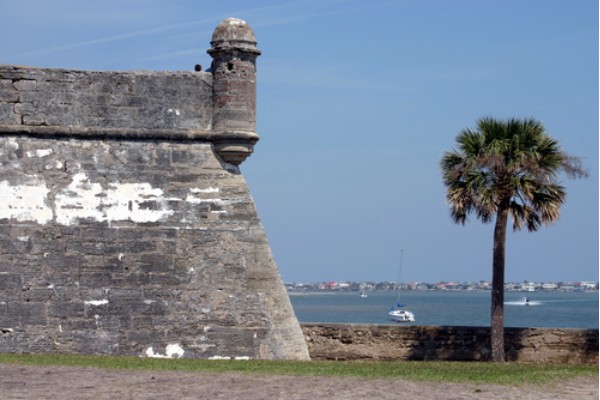
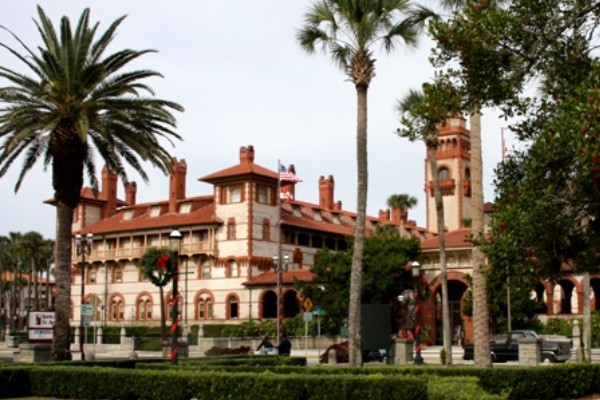
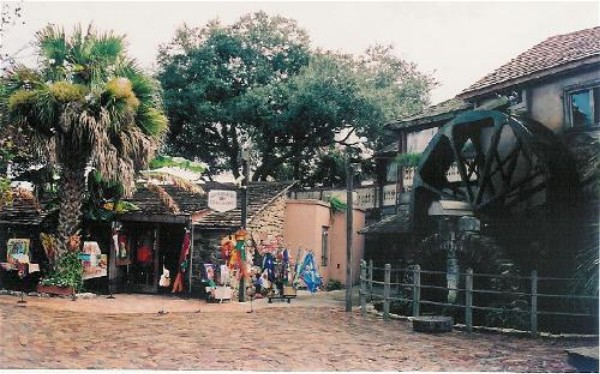
On 8 September 1565 the Spanish admiral Pedro Menéndez de Avilés founded St. Augustine on the east coast of Florida, in what is now St. Johns County. The settlement owes its name to the fact that his ships first sighted the Florida coast on 28 August, the feast day of St. Augustine. It is the oldest continuously inhabited settlement of European origin in the territory of the continental United States.
Earlier attempts had failed, among them the Spanish settlement at Pensacola on the west coast of Florida (1559 to 1561) and the French Fort Caroline (1564) on the site of present-day Jacksonville, a little to the north of St. Augustine. The first English attempt followed in 1585 on Roanoke Island in what is now North Carolina, and the famous Lost Colony was planted there in 1587. The first lasting success was Jamestown in Virginia, founded in 1607, 42 years after St. Augustine. The Spanish town of Santa Fe in New Mexico was founded in 1610, though Spanish settlements had existed in New Mexico since 1598.
… that there is a monument to Hermann the Cheruscan in the United States?
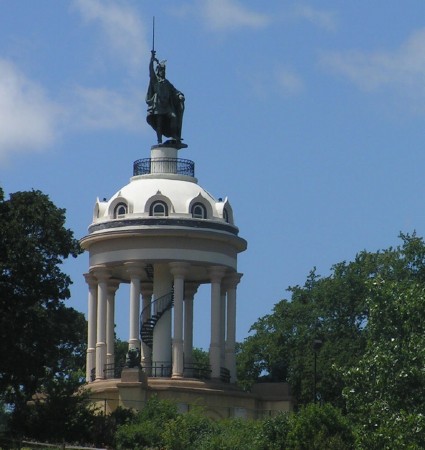
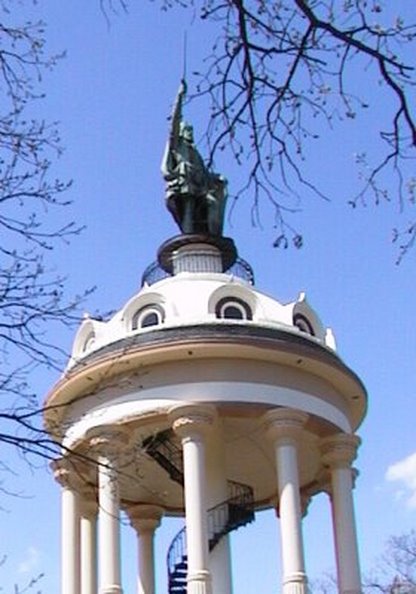

New Ulm is a small town of around 14,000 inhabitants, some 80 miles southwest of Minneapolis and St. Paul in Minnesota. After the census of 2000 it was regarded as the most German town in the United States, when about two thirds of its inhabitants reported German ancestry. According to the most recent figures from the US Census Bureau for the years 2020 to 2024 the share is about 56 per cent. The town dates its founding to 1854, when a scouting party of the Chicago Land Society, a German immigrant group based in Chicago and led by Frederick Beinhorn, established the first settlement. The name New Ulm came about because many of the settlers came from Württemberg. After a further group of German immigrants arrived from the Turner Colonization Society of Cincinnati under the leadership of Wilhelm Pfaender, New Ulm was incorporated as a city in 1857.
In the middle of the nineteenth century nativism contributed to anti-immigrant unrest across much of America. German immigrants answered with an organisation of their own, named after the legendary Cheruscan leader Hermann (Arminius): the Order of the Sons of Hermann. A lodge was founded in New Ulm as well. Julius Berndt stood out among its leaders and also became secretary of the national Order. It is thanks to his efforts and his designs that the 102-foot Hermann Heights Monument rose in New Ulm, modelled on the Hermannsdenkmal at Detmold; the cornerstone was laid in 1888 and the monument dedicated on 25 September 1897.
After the New Ulm lodge of the Order of the Sons of Hermann dissolved following the First World War, the city of New Ulm took over the monument in 1929 along with the care of it. In 1973 it was entered in the National Register of Historic Places, and in 2000 the 106th Congress recognised the Hermann Monument and Hermann Heights Park as a national symbol of the contribution of Americans of German descent.
… that for almost thirty years there was a Russian settlement at the gates of San Francisco?
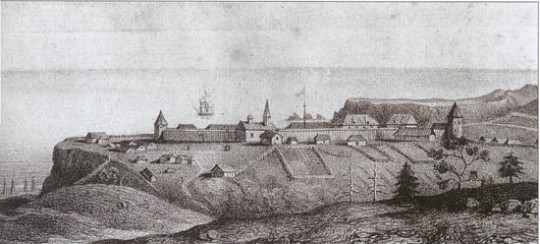
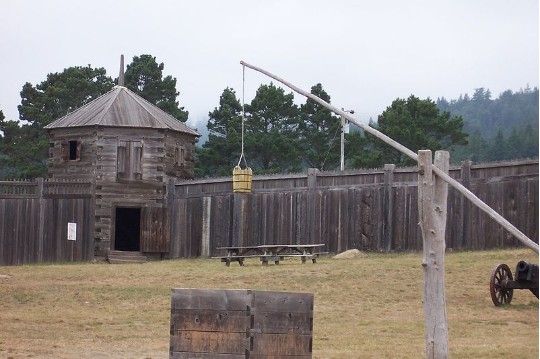
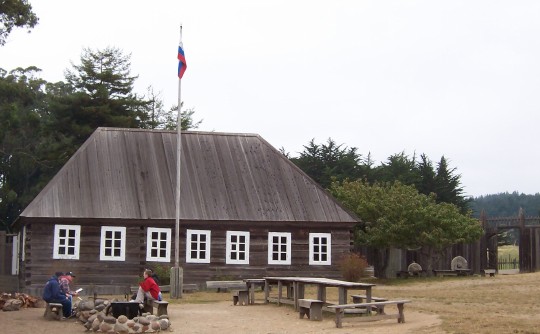
In 1741 Vitus Bering, a Danish naval officer in Russian service, discovered the southern coast of Alaska and the Aleutian Islands, and from then on the Russian tsars laid claim to sizeable territories in the far northwest of the North American continent. In 1799 Tsar Paul I agreed to the founding of the Russian-American Company and granted it a trading monopoly for the region from the 55th parallel to the Bering Strait, which corresponds roughly to the west coast of Alaska today. Russian sailors and traders pushed ever further south, and at times there were plans to take possession of the entire Pacific coast of North America. Chiefly as a supply post for the Russian traders in Alaska, the outpost of Ross was built in 1812 in what is now Sonoma County, about 75 miles north of San Francisco; the name alludes to Rossiya, and the place is known today as Fort Ross.
When Tsar Alexander I sought in 1821 to extend the company's trading monopoly further south, the 51st parallel having been named at first, the United States and Britain both protested sharply. These Russian ambitions were one of the motives for the Monroe Doctrine proclaimed in 1823, by which President James Monroe opposed any further European colonisation on American soil. The main concern behind it was that Spain and France might regain a foothold in Latin America. From then on the tsars were far more cautious about the expansive designs of the Russian-American Company.
In 1841 Fort Ross was sold for 30,000 dollars to the Swiss-American farmer John Sutter, payable in money, grain and livestock; Sutter never settled the sum in full. The economic influence of the Russian-American Company continued to decline, and in 1867 Tsar Alexander II sold Russian America, today's Alaska, to the United States for 7.2 million dollars.
… that African Americans fought alongside white Americans for American freedom?
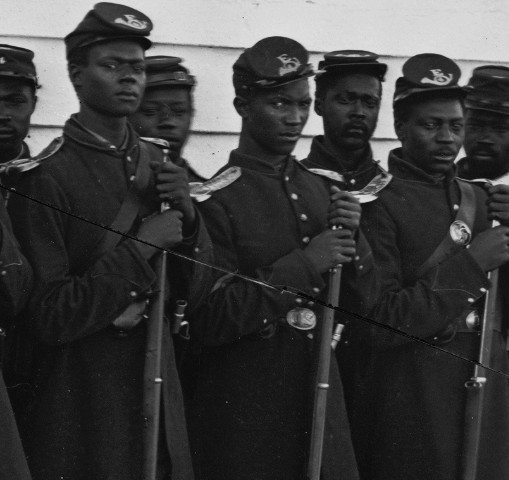
In the American War of Independence from 1775 to 1783 George Washington, himself a slaveholder, at first refused to recruit African Americans for his army, since he suspected that arming them carried the risk of a slave rebellion. The call issued in 1775 by Lord Dunmore, the British governor of Virginia, to free all slaves willing to fight for the Crown against the rebelling Americans, together with his own difficult position, finally forced Washington to change his mind. At the end of December 1775 he lifted the ban, on 16 January 1776 Congress too allowed free African Americans to re-enlist, and in 1777 recruitment was opened to all free men, later to enslaved men as well in return for a promise of freedom.
In all, some 5,000 African Americans fought on the Patriot side, partly in separate units under white officers, as Rhode Island chose to organise them, and partly in mixed units. In the south only Maryland brought itself to recruit African Americans, while Virginia allowed it only in rare cases, when African Americans fought in place of their white masters. The South Carolina legislature firmly rejected a proposal to arm 3,000 to 5,000 enslaved men. The only count of the Continental Army, taken in August 1778, records 755 black soldiers, just under 4 per cent of its strength. The often quoted figure of 25 per cent goes back to a single observation by the French officer Ludwig von Closen in 1781 and is now regarded as much too high.
African Americans served in the war against Britain from 1812 to 1815 as well, on land and at sea. After that things changed: from 1820 army regulations expressly excluded African Americans, so that in the war against Mexico from 1846 to 1848 they could serve only in the navy and as servants and labourers. Separate units had existed as early as the War of Independence, but only in the Civil War did the separation of white and black soldiers become a consistent system. It was ended in 1948 by President Truman's Executive Order 9981.
… what the spoils system is and who turned it into a system?
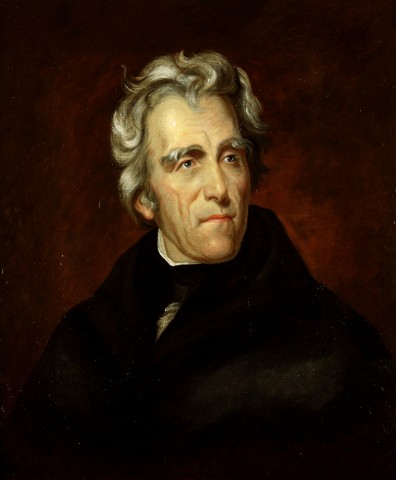
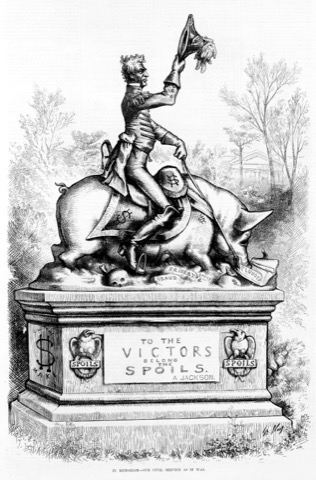
In the United States the spoils system means the practice of filling public offices largely with members or supporters of the winning party. The term goes back to Senator William L. Marcy of New York, who defended such appointments in 1832 with the words that to the victor belong the spoils of the enemy. Political patronage existed before Andrew Jackson; Thomas Jefferson had been replacing Federalist officeholders from 1801. It was the seventh President, Andrew Jackson, who turned it into a consistent system after his election victory of 1828. Jackson himself saw in it an important republican principle: regularly refilling public offices was meant to fight corruption and entrenched bureaucracy and to draw the public further into political affairs.
After the murder of President Garfield, Congress passed the Pendleton Civil Service Reform Act in 1883, which tied federal posts to competitive examination and to merit. At first the act covered only a tenth of the 132,000 federal employees of the day; today it applies to the great majority of the roughly 2.9 million federal positions. A new president currently fills about 4,000 posts by political appointment, some 1,200 of them with the consent of the Senate.
Andrew Jackson was the first president to have grown up in modest circumstances. All six of his predecessors came from families belonging to the American elite of the east coast. His election was seen as the victory of the common man, which helps explain the tumultuous scenes at his inauguration. In his eight years in office he decisively widened executive authority. For the first time the presidency was regarded as the undisputed centre of the federal government; Jackson stressed its plebiscitary character, since the president, with electors now chosen by popular vote as well, was the only officeholder elected by the whole people, unlike senators and members of the House. Jackson insisted that his cabinet members carry out his instructions. He also created the practice of the "kitchen cabinet" as a special advisory body. He turned the presidency from a law-enforcing office into a policy-making one.
He vetoed acts of Congress twelve times, five regular vetoes and seven pocket vetoes, more than all his predecessors together. The pocket veto, a way of blocking legislation by withholding a signature in the closing days of a session of Congress, had first been used by James Madison in 1812; Jackson simply used it far more often.
… how the figure of Uncle Sam came to personify the United States?
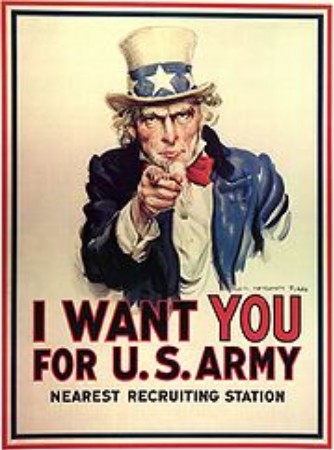
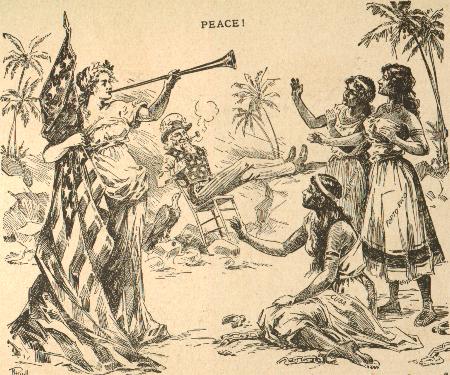
The figure of Uncle Sam goes back to the war between the United States and Britain from 1812 to 1815. As the story is told, soldiers at an army post in northern New York State received barrels of meat marked with the letters "US". The soldiers are said to have taken these at first for the initials of the supplier, a meat packer from Troy, New York, named Samuel Wilson (1766 to 1854), whom they called "Uncle Sam". Wilson supplied the army with barrels of salted pork and beef stamped "US". Later the soldiers transferred the letters to the United States.
The appearance familiar today goes back to the illustrator James Montgomery Flagg. He created it in 1916 as the cover of Leslie's Illustrated Weekly, at first under the line "What Are You Doing For Preparedness?", and used his own face as the model. After the American entry into the war in 1917 Flagg transferred the rights to the government, the text became "I Want You", and the picture became a recruiting poster. Other depictions of the figure had existed before.
In 1961 Congress honoured Samuel Wilson in a concurrent resolution of both chambers as the progenitor of the national symbol. The resolution expressly noted that Congress itself had never officially and permanently adopted the symbol. Uncle Sam is understood as the personification of the United States. He is generally shown as a lean, elderly white man with white hair, a goatee and a mostly serious expression. He wears the national colours, a dark blue jacket with red and white striped trousers. His top hat usually carries the colours of the flag, the Stars and Stripes.
… that the words of the American national anthem were written during a negotiating mission?
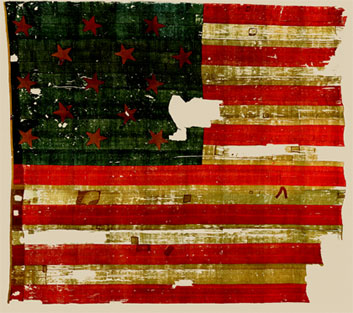
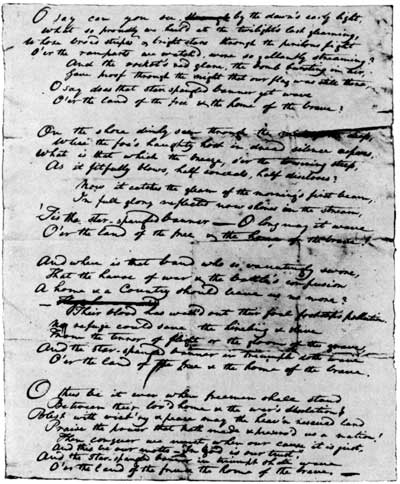
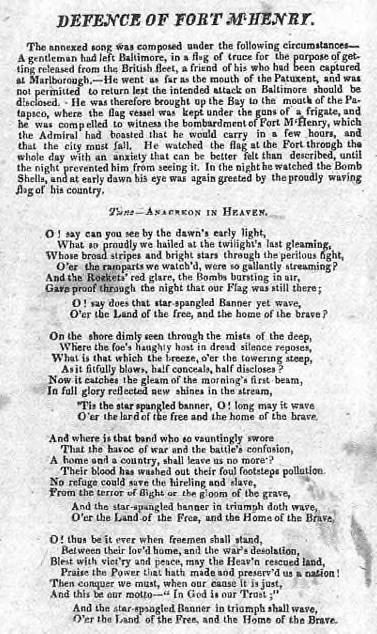
During the war between the United States and Britain from 1812 to 1815 the American amateur poet Francis Scott Key witnessed the bombardment of Fort McHenry at the harbour of Baltimore on 13 and 14 September 1814. He was not there as a prisoner but as a negotiator: together with John S. Skinner, the American agent for prisoners of war, he had sought out the British fleet to obtain the release of Dr. William Beanes. The negotiation succeeded, but because the two now knew the British plan of attack they were not allowed back on shore until the attack was over. Key therefore watched the bombardment from his own American truce ship. The widespread claim that he stood aboard the British warship HMS Minden is a nineteenth-century error; that ship was not in North American waters at any point during the war.
On the morning after the bombardment, the American victory and the flag still flying over the fort inspired Key to write the four-verse poem "O say can you see …", which he first called "Defence of Fort McHenry". The flag then carried 15 stars and stripes, since Kentucky and Vermont had joined the original thirteen states. Key's brother-in-law Nicholson saw that the poem fitted the tune of "To Anacreon in Heaven", the club song of a London musical society composed by John Stafford Smith around 1775, and had it printed on 17 September 1814. A few days later it appeared in the Baltimore Patriot and in the American with the note "Tune: Anacreon in Heaven".
After Thomas Carr published words and music together under the title "The Star-Spangled Banner" the song quickly became popular. In 1889 the Secretary of the Navy made it the official music for raising the flag, in 1916 President Wilson ordered it played at military and other suitable occasions, and in 1918 it is said to have been heard for the first time during a World Series baseball game. On 3 March 1931 "The Star-Spangled Banner" became the official national anthem of the United States when President Hoover signed the relevant act. Before that other songs had served as a quasi national anthem on official occasions, among them "My Country, 'Tis of Thee" to the tune of the British anthem, and "Hail Columbia".
… that a Prussian Jew once served as governor of Acoma Pueblo in New Mexico?
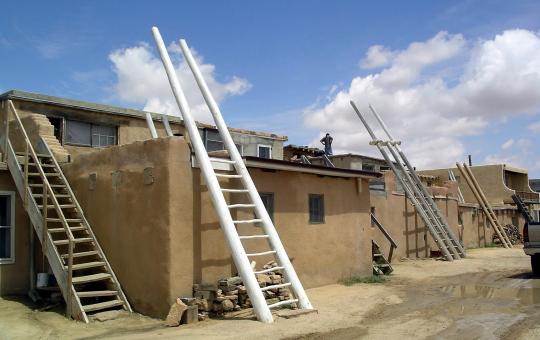
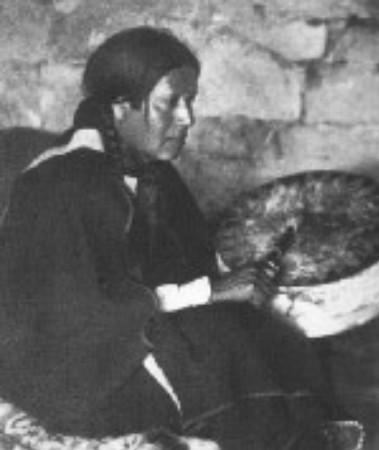
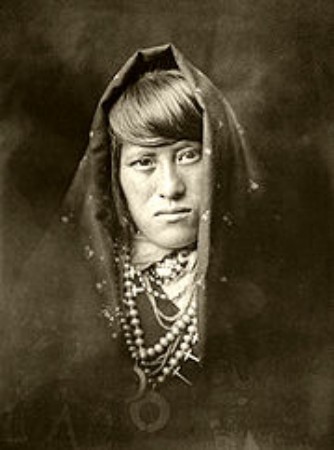
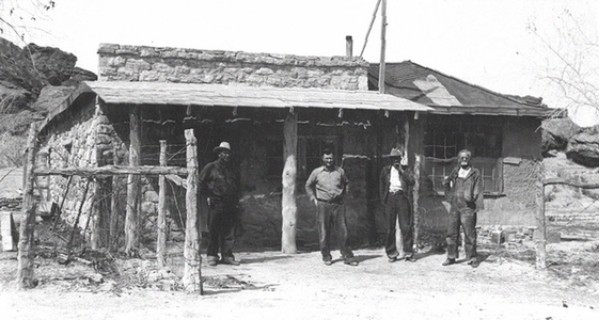
Solomon Bibo was born in 1853 in Brakel in Westphalia, then part of Prussia, the sixth of eleven children of the cantor of the Jewish community. His older brothers emigrated to America, eventually found work with a trading family in Santa Fe and then set up a trading post in the small settlement of Cebolleta in the midst of the Navajo. In 1869 the sixteen-year-old Solomon followed his brothers and worked with them at a series of trading posts among various tribes of the Southwest. They bought Indian goods and sold them to the U.S. Army to supply the forts in the region. In 1882 Solomon established a trading post at Acoma Pueblo west of Albuquerque.
Bibo was soon asked by the Acoma for help in disputes over land titles. Since the Spanish conquest of the pueblo in 1599 the Crown had granted large parts of land long held by the pueblo to settlers and soldiers, and their descendants still claimed some of it. Bibo and his brother Simon at least secured a review of the official survey by the Department of the Interior in 1881. The Acoma claim did not prevail.
In 1885 Bibo married Juana Valle, the granddaughter of the governor, and so became a member of the pueblo. After the Spanish conquest the Pueblo peoples had become Catholic and had taken over Spanish titles such as governor in place of chief, while keeping their religious and other traditions all the same. Since there was no rabbi in New Mexico at the time, the couple married twice, once before a Catholic priest and once in the Indian rite. In the same year the Acoma elected him their governor. He held the office in four separate terms and remained the only non-Indian ever to serve as governor of a pueblo. His greatest achievement was the founding of a school; in 1885 he oversaw the hiring of the first teacher in the pueblo.
The economic depression of the 1890s ruined him financially, and he moved with his family to San Francisco, where he raised his children in a Jewish community and gave them a Jewish education. He recovered financially and eventually opened a specialty grocery store. He died in San Francisco in 1934, his wife Juana seven years later.
… that German is the ancestry most often reported in the United States?

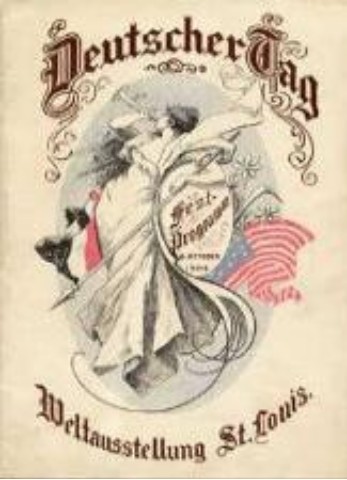
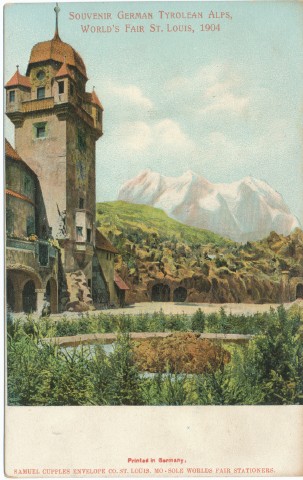
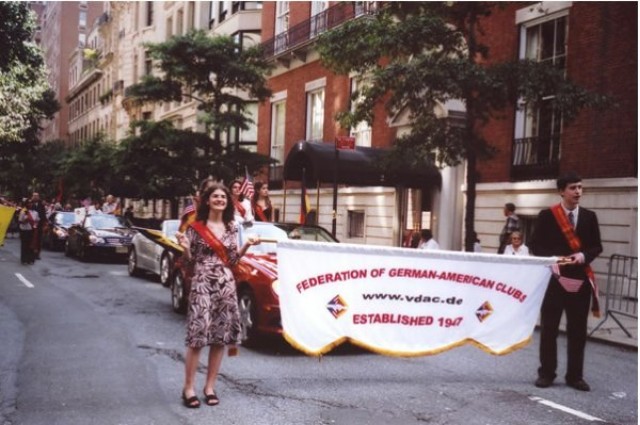
Until the year 2000 the US Census Bureau in the Department of Commerce recorded the ancestry of Americans every ten years through the long form of the census. Since 2005 the question has belonged to the American Community Survey and is asked every year. In the 2000 census 42.8 million Americans, 15 per cent of the population, reported German or partly German ancestry; next came 30.5 million with Irish, 24.9 million with African American and 24.5 million with English ancestry, 20.2 million simply answered "American", 18.4 million named Mexican and 15.6 million Italian forebears. According to the American Community Survey of 2022 the figures are 41.1 million with German ancestry, followed by 31.4 million English, 30.7 million Irish, 17.8 million "American" and 16.0 million Italian. German therefore remains the ancestry most often reported, though the number is slowly declining.
Over the long run these surveys show European ancestries shrinking while African American, Hispanic and Asian ancestries grow. One may question how seriously such figures should be taken, for various reasons: multiple answers, where German, Irish and Scandinavian forebears appear in one and the same family, or the fact that before 1871 one could not strictly speak of Germans at all, only of Palatines, Saxons or Frisians. Even so it is true that for a century and a half Germany was the single most important country of origin for immigration to the United States; around seven million people have come from there since 1820.
… that American historians and political scientists have been ranking the best and worst presidents since 1948?
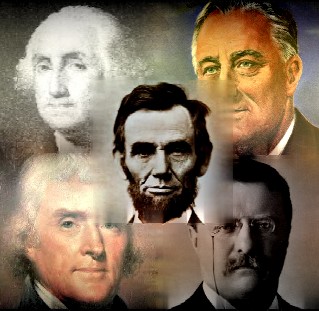
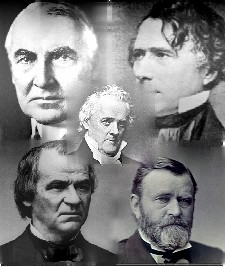
Up to a hundred scholars take part in these assessments, rating the performance of each president on a points scale. The averages produce the ranking that is then published. The results are discussed in academic journals and appear in every presidential biography. For decades these rankings have been remarkably stable, at least at the two ends.
According to the C-SPAN survey of historians and presidential scholars from 2021, the five most highly regarded presidents are, in order, Abraham Lincoln, George Washington, Franklin D. Roosevelt, Theodore Roosevelt and Dwight D. Eisenhower. The Presidential Greatness Project, for which some 190 experts were polled in 2024, arrives at Lincoln, Franklin D. Roosevelt, George Washington, Theodore Roosevelt and Thomas Jefferson. At the bottom of the C-SPAN list of 2021 stand James Buchanan, Andrew Johnson, Franklin Pierce, Donald Trump and William Henry Harrison.
James Buchanan, Lincoln's predecessor in office from 1857 to 1861, is faulted above all for looking on idly as several southern states left the Union during his presidency. Warren G. Harding, elected as Wilson's successor in 1920 and dead by 1923, stands at number 37; of him the later President Hoover said that he was not a man with either the experience or the intellectual capacity the position demanded. Franklin Pierce (1853 to 1857) badly misjudged the importance of the slavery question, contributed through his stubbornness to the conflict of "Bleeding Kansas" and provoked disputes with Spain and Britain besides. Andrew Johnson, Lincoln's successor from 1865 to 1869, is said to have been drunk at his swearing-in as vice president; more consequential, though, was his stance during Reconstruction, which brought him into ever sharper conflict with Congress and left him only narrowly acquitted in impeachment proceedings.
What is striking is how far individual judgments shift over the decades. Ulysses S. Grant (1869 to 1877), former commander of the Union armies and hero of the Civil War, whose presidency was already judged by contemporaries as weak, ineffective and shot through with scandal, now stands at number 20. George W. Bush has risen as well: in a 2006 survey of 744 experts by the Siena Research Institute more than eight in ten still rated his presidency below average or a failure, while the rankings of 2021 and 2024 place him at 29 and 32. Barack Obama stands at 10 and 7. The public reaches different verdicts from the scholars; its favourites are usually presidents of the recent past.
… that President Obama had already been in office for several minutes before he took the oath?

Article II, Section 1 of the Constitution says of the presidency: "Before he enter on the Execution of his Office, he shall take the following Oath or Affirmation …". The Twentieth Amendment of 1933, however, lays down in Section 1: "The terms of the President and Vice President shall end at noon on the 20th day of January … and the terms of their successors shall then begin." It was already about 12.05 pm on 20 January 2009 when Barack Obama spoke his oath, so that he had been President of the United States for roughly five minutes. Chief Justice Roberts stumbled over the wording, and as a precaution the oath was repeated at the White House on the evening of 21 January 2009.
… that a US president and his vice president were once elected from opposing parties?

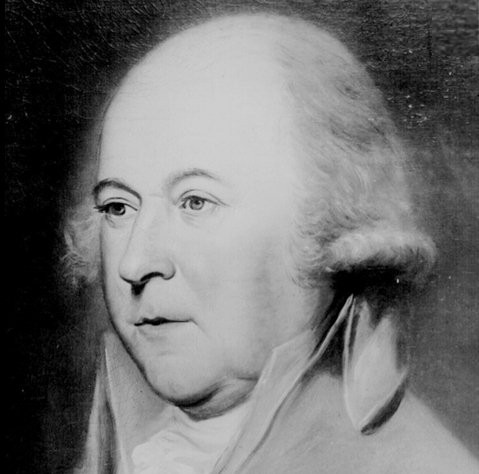
During George Washington's two terms a first party system had taken shape; facing the Federalists who supported the administration, with Hamilton as its strong man, stood a group of opponents around Madison and Jefferson who called themselves Republicans and are known in the scholarly literature as Democratic-Republicans, not to be confused with today's Republican Party. The presidential election of 1796 was therefore the first in which two parties faced one another. The Federalists, badly divided at the time, eventually settled on John Adams as their candidate, while the Republicans nominated Jefferson.
In those days, with political parties not provided for in the Constitution, the president and vice president were still chosen by the electors in a single ballot. Each elector had two votes but could not say which was meant for president and which for vice president. Whoever received the highest number of votes, provided that was a majority of all electoral votes, became president, and the candidate with the second highest number became vice president. Hamilton was at odds with his own party colleague Adams, went so far as to call him unfit for the presidency and tried to undermine his election by scheming in favour of the Federalist candidate for the vice presidency. The scheme backfired, and the surprising result, counted on 8 February 1797, produced a situation unique in American history: President John Adams was a Federalist and his Vice President Thomas Jefferson a Republican. The Twelfth Amendment of 1804 separated the votes for president and vice president, so that this constellation can no longer arise.
… what the shortest term of a US president was?
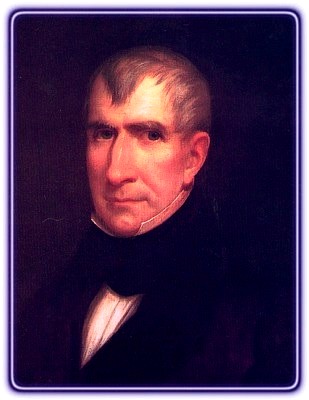
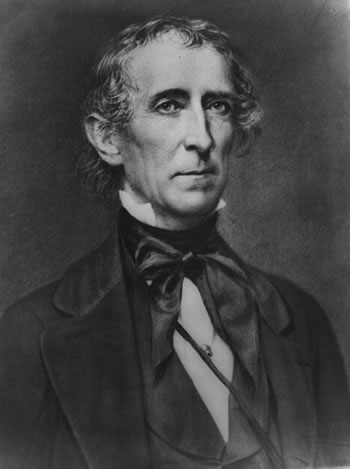
William H. Harrison was elected the ninth President of the United States in 1840. He was sworn in on 4 March 1841 in cold, wet weather and delivered what remains the longest inaugural address ever given by an American president. He died on 4 April 1841, after 31 days in office, the shortest term of any US president. For a long time the cause of death was taken to be pneumonia following a cold. A medical-historical study from 2014 considers typhoid or paratyphoid fever more likely, contracted through the drinking water of Washington, then contaminated by sewage.
He was succeeded in office by the elected Vice President John Tyler, whose presidential rights were disputed at first but who is counted as the tenth President. An explicit constitutional basis for this succession and for filling the vice presidency arose only with the Twenty-Fifth Amendment, passed by Congress on 6 July 1965 and ratified on 10 February 1967. Under it the president nominates a new vice president, who takes office after both chambers of Congress have approved. Such a rule was thought necessary because otherwise the third figure in the statutory line of succession would move up, breaking the separation of executive and legislature; since the Presidential Succession Act of 1947 that is the Speaker of the House, while in Tyler's day the act of 1792 placed the president pro tempore of the Senate there. No such rule existed then, and so the office of vice president remained vacant throughout John Tyler's term, until 1845.
… who was the first African American woman to seek the presidential nomination of one of the two major parties?

Shirley Chisholm, a member of Congress from New York, sought the presidential nomination of one of the two major parties in 1972, the first African American woman to do so. She entered twelve primaries and received 152 delegate votes at the Democratic convention. Earlier still, George Edwin Taylor had run for the National Liberty Party in 1904.
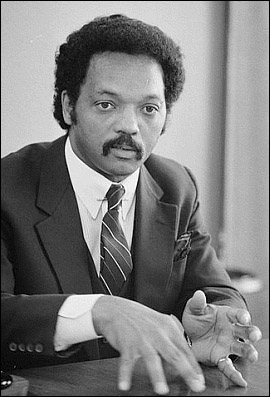
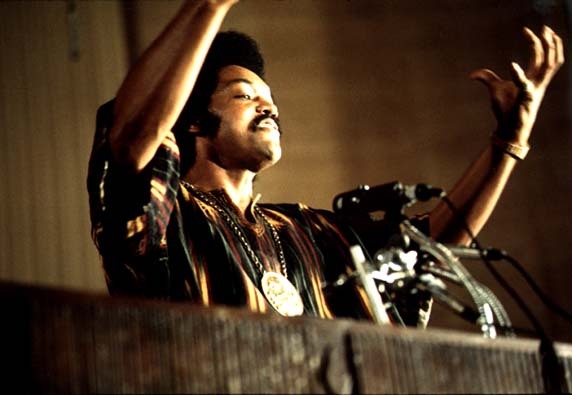
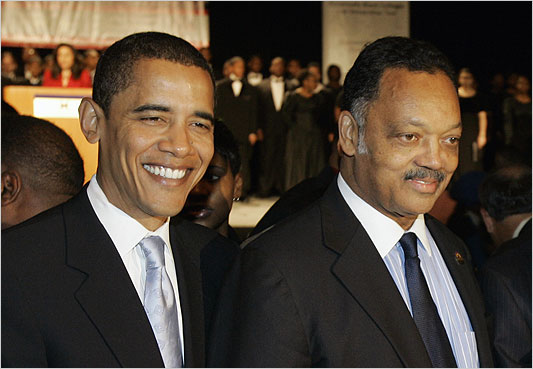
The most promising campaigns before Barack Obama were mounted by Jesse Louis Jackson. He was born in 1941 in Greenville, South Carolina, and rose during the 1960s to become, alongside Martin Luther King, one of the most important black civil rights leaders. After the assassination of King on 4 April 1968 in Memphis, he appeared before the television cameras the following day in a shirt that he said carried King's blood. His account of events remained disputed. In the same year he was ordained a Baptist minister, and in 1971 he founded the civil rights organisation Operation PUSH, People United to Save Humanity. Over the following fifteen years the Reverend Jesse Jackson became known internationally as an unyielding fighter for civil rights.
In 1984 he sought the Democratic presidential nomination for the first time and finished third, behind Walter Mondale and Gary Hart. In 1988 he ran again, this time in a close contest with the governor of Massachusetts, Michael S. Dukakis. Jackson's populist message went down well with poor white voters as well as with black voters, and he finished the primaries second with about 6.9 million votes. He hoped for the nomination as candidate for the vice presidency, but Dukakis chose the conservative senator Lloyd Bentsen of Texas. In later years Jackson became known repeatedly for journeys on which, often without any official mandate from the US government, he secured the release of prisoners in Syria, Cuba, Iraq and the former Yugoslavia. He died in Chicago on 17 February 2026 at the age of 84.
… who was the first American diplomatic representative in Berlin?
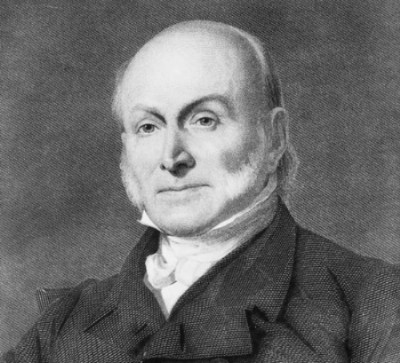
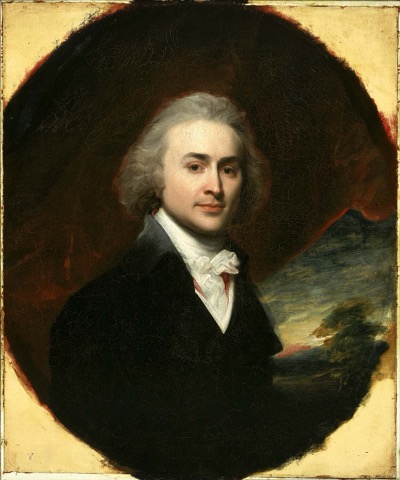
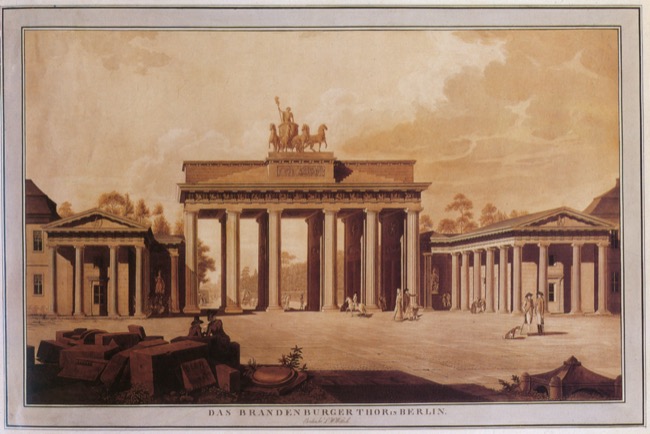
In 1797 John Quincy Adams, born in Massachusetts in 1767 and died in Washington DC in 1848, came to the Prussian court in Berlin as the first American diplomatic representative. He presented his credentials on 5 December 1797, and his mission ended on 5 May 1801. His title was Minister Plenipotentiary; the rank of ambassador was first held in Berlin by Theodore Runyon from 26 October 1893. There were no embassy buildings at the time, and missions were housed in rented premises that changed from time to time. From 1801 to 1835 the United States had no chief of mission of its own in Prussia. In 1835 Henry Wheaton came to Berlin, first as chargé d'affaires and from 1837 as minister. American diplomatic representation in Berlin, accredited to Germany rather than Prussia after 1871, then continued without a break apart from the interruptions of the wars.
John Quincy Adams was the son of the second President of the United States, John Adams. Before Berlin he had represented his country in the Netherlands, and later in Russia and in Britain (1815 to 1817). He had been appointed to Portugal in 1796 but never took up the post. In 1825 he became the sixth President of the United States himself and remained in office until 1829. In 1841 he argued before the Supreme Court on behalf of the Africans of the Spanish ship La Amistad, who had freed themselves and landed in the United States. The court found that they had never lawfully been slaves and ordered their release, so that they could return home as free people.
… how many places in the United States are called Germantown?
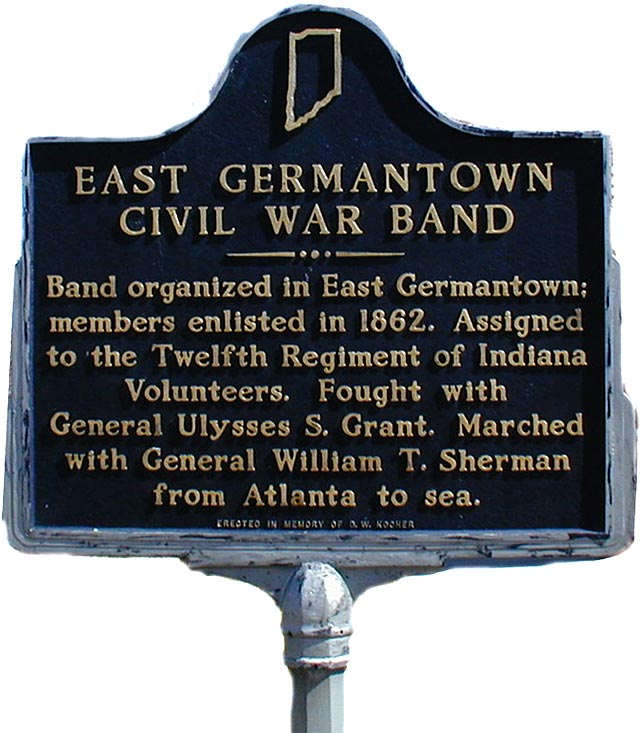


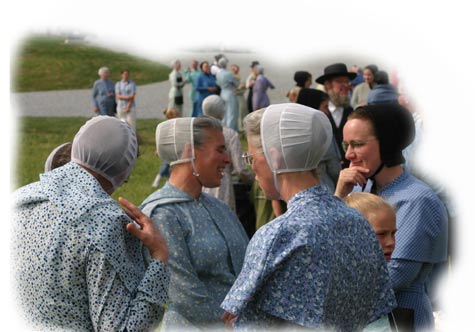
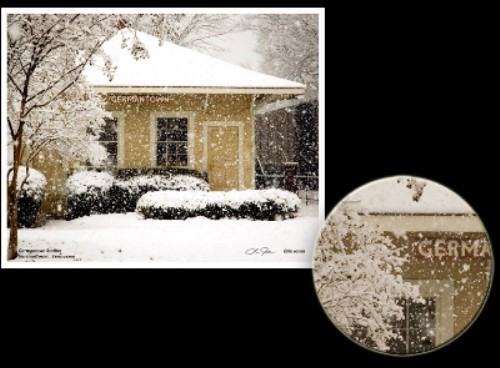

The name Germantown occurs many times over in the United States, attached to cities, villages, neighbourhoods and other localities. The official place-name database of the US Geological Survey currently records 34 populated places of that name, among them 6 in Pennsylvania, 4 in Maryland and 3 each in New York, Ohio and Tennessee. The oldest is the Germantown founded in 1683, the first permanent German settlement in America and today a neighbourhood of Philadelphia. Two ships of the US Navy are named after that place and after the battle fought there on 4 October 1777 during the War of Independence: the sloop Germantown launched in 1846 and the dock landing ship USS Germantown commissioned in 1986.
… that nine Americans became President of the United States without being elected to the office?
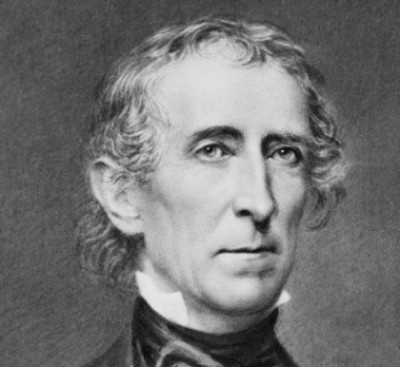
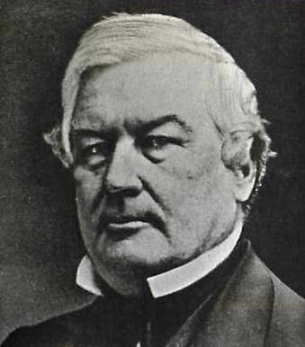
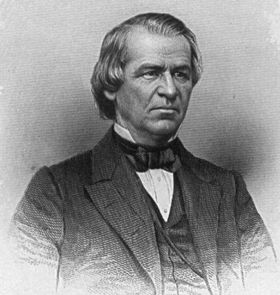

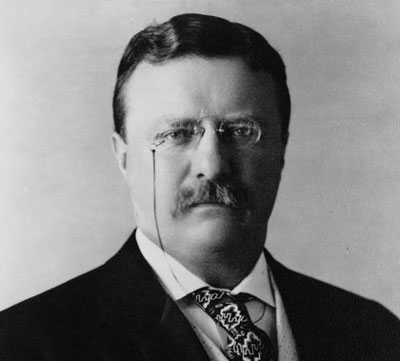
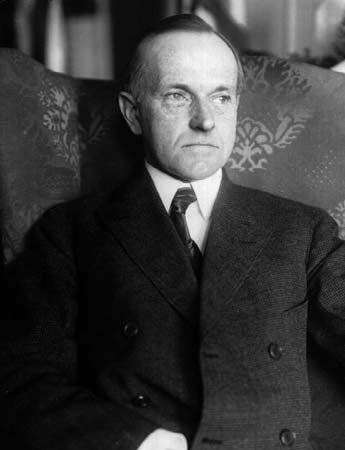
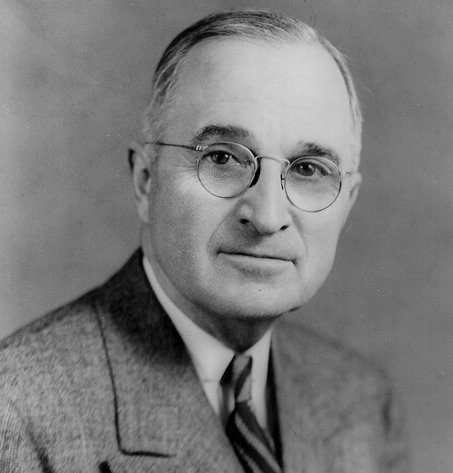
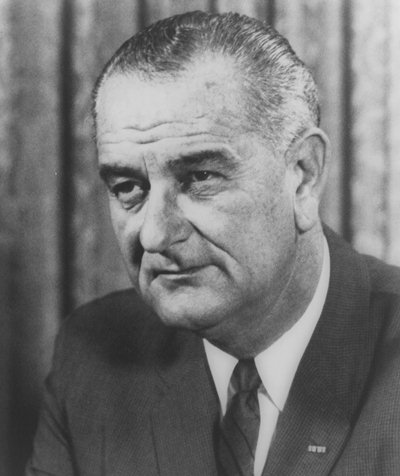
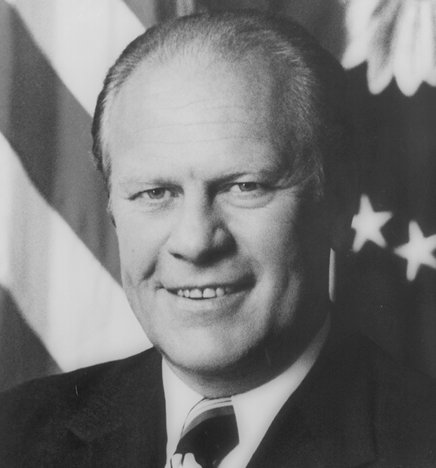
Of these nine vice presidents who became president, Gerald Ford was the only one never elected by the American people either as president or as vice president; President Nixon nominated Ford as vice president after the resignation of Vice President Spiro Agnew, and Ford then became president after Nixon resigned over the Watergate scandal. Four of the presidents who arrived in office as vice presidents were subsequently confirmed by election, and four came to office after their predecessor had been shot.
The nine former vice presidents were: John Tyler (10th President 1841 to 1845), Millard Fillmore (13th President 1850 to 1853), Andrew Johnson (17th President 1865 to 1869; his predecessor A. Lincoln shot), Chester A. Arthur (21st President 1881 to 1885; his predecessor J. A. Garfield shot), Theodore Roosevelt (26th President 1901 to 1909, re-elected; his predecessor W. McKinley shot), Calvin Coolidge (30th President 1923 to 1929, re-elected), Harry S. Truman (33rd President 1945 to 1953, re-elected), Lyndon B. Johnson (36th President 1963 to 1969, re-elected; his predecessor J. F. Kennedy shot) and Gerald Ford (38th President 1974 to 1977; his predecessor R. Nixon resigned).
… that Monrovia, the capital of the West African state of Liberia, is named after the fifth US President James Monroe?
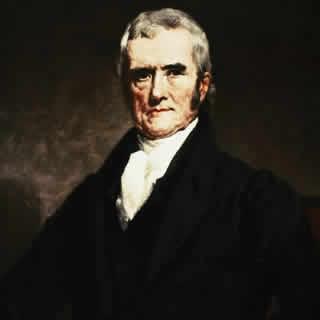
Over the course of the nineteenth century the question of slavery increasingly overshadowed all the other reform movements in the United States that had drawn comparable interest in the early decades. In colonial times most Americans had accepted slavery as a necessity, for economic reasons among others, and held it to be sanctioned by the Bible besides. The ideals of liberty and equality of the Revolution produced widespread rejection of the institution, even in the south. That rejection ebbed away, though, at the beginning of the nineteenth century. Anti-slavery societies, particularly numerous in the upper south, went on campaigning, but in a muted way, and at bottom aimed only at gradual emancipation.
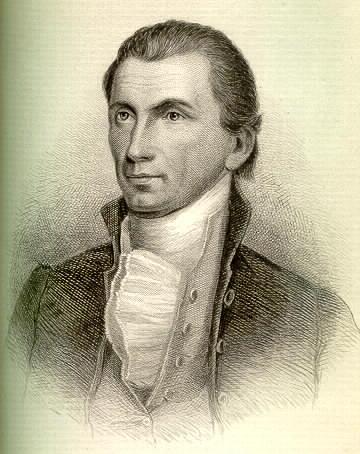
In 1816 the American Colonization Society was founded to promote the settlement of freed slaves in West Africa, a project known in the United States as colonization. Out of its activities a settlement grew on the West African coast from 1822. In 1824 it received the name Liberia and its capital the name Monrovia, after the fifth US President James Monroe, who was in office from 1817 to 1825. Liberia became an independent republic only in 1847.
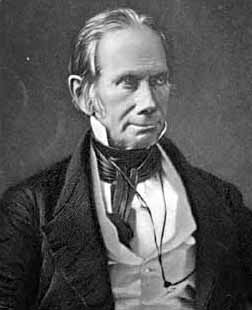
The society won many supporters for the idea in the north as well as in the south, and even some of the later leading and determined opponents of slavery believed at first that colonization might pave the way to emancipation. In the south, however, many saw it essentially as an opportunity to rid the country of freed slaves who might serve as leaders of slave revolts. By around 1830 it was already obvious that the idea had failed. Nothing changed in that respect when President Lincoln, at the beginning of the Civil War, once again considered colonization as a possible answer to the racial question. Only a small fraction of the black population had been settled in West Africa under the scheme by the time of the Civil War.
… what Manifest Destiny means?
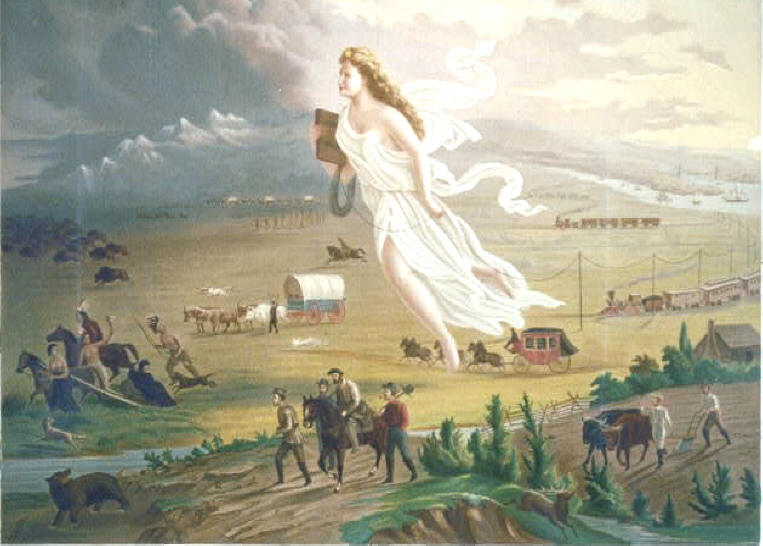
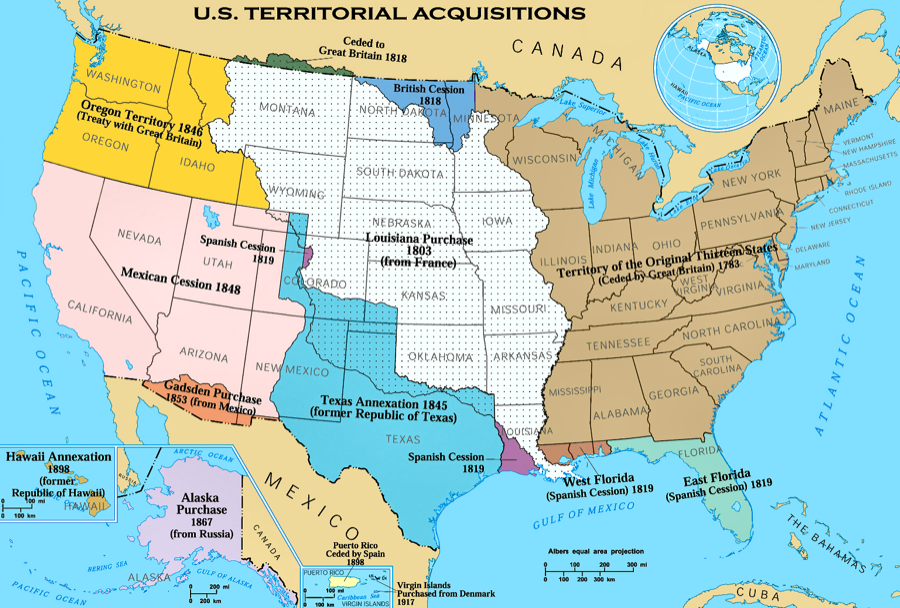
The phrase Manifest Destiny was used for the first time in 1845, in an unsigned essay in the United States Magazine and Democratic Review that is usually attributed to the journalist John L. O'Sullivan and that argued for the annexation of the then still independent Republic of Texas. A little later, on 27 December 1845, O'Sullivan argued in his newspaper, the New York Morning News, that the United States was entitled to claim the whole of the Oregon Territory: "And that claim is by the right of our manifest destiny to overspread and to possess the whole of the continent which Providence has given us for the development of the great experiment of liberty and federated self-government entrusted to us."
Manifest Destiny expressed the belief that Providence had marked out control of the whole North American continent for the United States. Its advocates, at that time Democrats above all, held that such expansion was not only good but also plain to see, "manifest", and certain to happen, a "destiny". The phrase thus offered a convenient justification for the territorial expansion of the United States across North America to the Pacific and, put bluntly, in the eyes of its advocates for the notion that lesser peoples such as Indians or Mexicans had to give way to land-hungry pioneers. It expressed the nineteenth-century conviction that the United States had a mission to spread its form of democracy and liberty. Like other ideas of that century, Manifest Destiny contained a great deal of idealism and romance, but it also contained elements of aggression and even of racism, which critics of the day named openly in political debate.
Manifest Destiny thinking was revived after the Civil War, around 1890, now from the Republican side as a theoretical justification for American expansion beyond the North American continent. In the first half of the twentieth century the expression went out of fashion among American politicians, yet some commentators believe that elements of Manifest Destiny, above all the belief in an American mission to spread and defend democracy worldwide, still influence political thinking in the United States.
… that Coca-Cola was produced in Germany well into the Second World War?
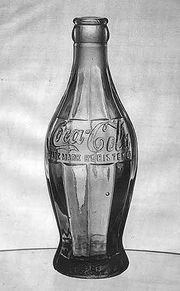
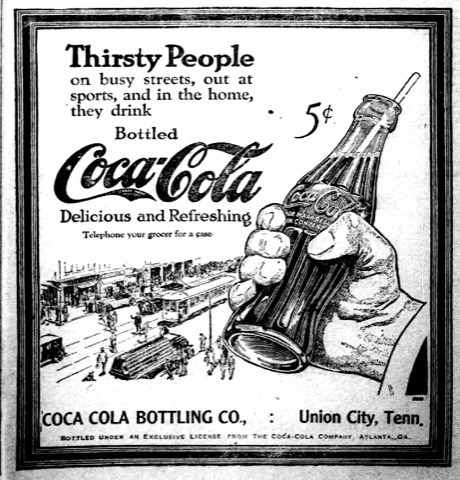
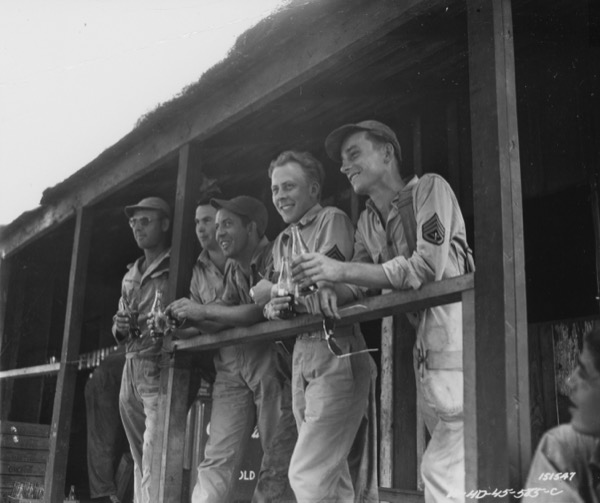
On 8 April 1929 the Essener Vertriebsgesellschaft mit beschränkter Haftung für Naturgetränke bottled the first Coca-Cola in Germany, in Essen. Its manager was Ray Rivington Powers, sent over from Atlanta. In 1930 Coca-Cola GmbH was added, supplying the syrup, while the bottling continued in Essen. The real breakthrough came with the Olympic Games in Berlin in 1936.
Business continued at first even after the war began, but the raw materials for making cola grew ever scarcer. Max Keith, the manager of Coca-Cola GmbH, therefore had a new soft drink developed in 1940: Fanta, named after the Fantasie, the imagination, with which his staff were told to come up with a name. It was made from whey and apple pomace, the residue from pressing cider. Fanta kept the company alive, while production of Coca-Cola had to stop in 1942.
After the war Coca-Cola production started up again in Essen. The orange soft drink known as Fanta today is a new creation of 1955 and shares nothing with the wartime drink but the name.
… how and when Hawaii became the 50th state of the United States?
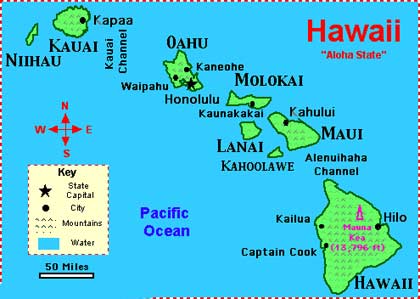
From 1820, when American whalers and missionaries from New England first came to Hawaii, then a monarchy, ties to the United States grew steadily stronger. By the end of the Civil War American settlers, mostly the children of missionaries, had built up sugar plantations and so dominated both the economy and the government of the islands; the pineapple industry followed only around the turn of the century. A trade treaty of 1875 allowed Hawaiian sugar to enter the United States freely while forbidding Hawaii to make any part of its territory available to other powers, leaving the islands economically dependent on the United States. A further treaty of 1887 narrowed Hawaiian independence still more by granting the United States an exclusive naval base at Pearl Harbor.
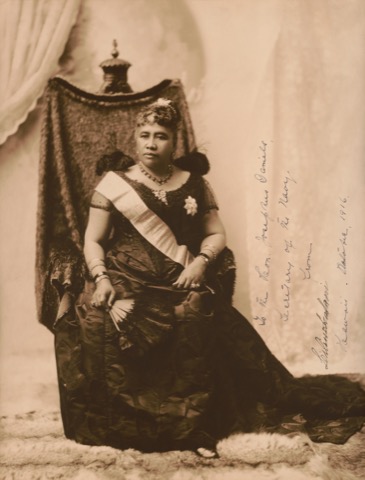
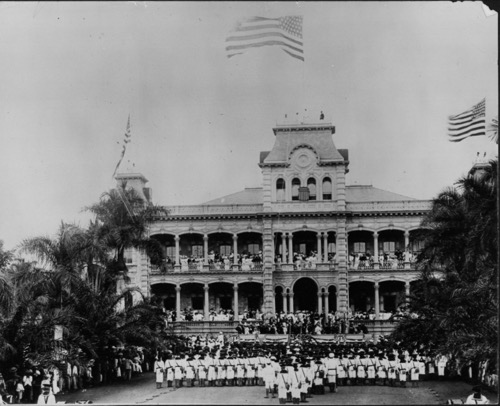
Until then the American planters had not pressed for annexation. In 1890, however, a new American tariff was passed that was unfavourable to their sugar exports, and in 1891 a new monarch came to the Hawaiian throne with the declared intention of ending the dominance of foreigners. In January 1893 the American planters, with the support of marines from the cruiser Boston, then anchored at Honolulu, staged a revolt, deposed the queen, proclaimed a provisional government and immediately sent a delegation to Washington asking for annexation. The first treaties to that end met resistance from anti-imperialist Democrats and from domestic sugar producers. Only during the war with Spain was Hawaii annexed in 1898 by a joint resolution of Congress, a procedure that required no more than a simple majority.
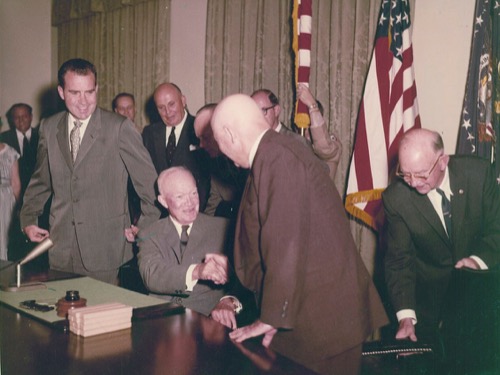
After Hawaiians had over the years become a minority in their own land through immigration from Asia and from the United States, President Eisenhower signed the Hawaii Admission Act on 18 March 1959. On 27 June 1959 Hawaiian voters approved admission to the Union by 132,773 votes to 7,971, and on 21 August 1959 Eisenhower made Hawaii the 50th state by proclamation. In 1993 Congress passed the so-called Apology Resolution, which describes the overthrow of the monarchy in 1893 as unlawful; President Clinton signed it on 23 November 1993. To this day Native Hawaiians demand more rights, land and self-determination. The movement is divided: one part seeks recognition as a nation within the United States, another the restoration of an independent Hawaii.
… that a society of German noblemen in Mainz had something to do with the Germans in Texas?

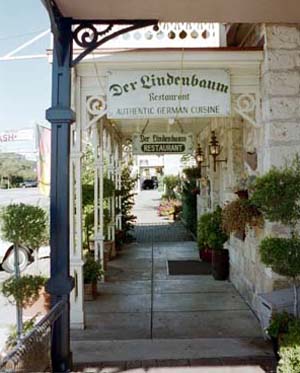
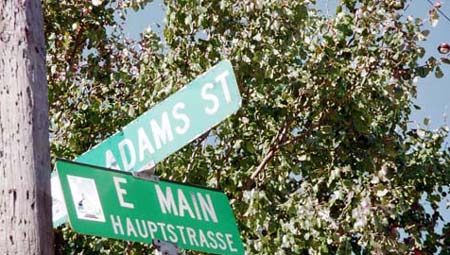
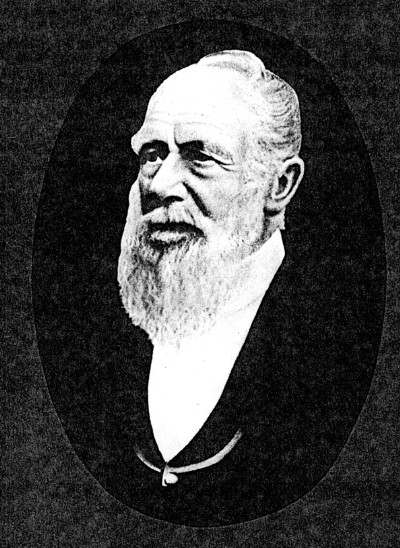
Mainzer Adelsverein was the short name of the Verein zum Schutze deutscher Einwanderer in Texas, the Society for the Protection of German Immigrants in Texas (1842 to 1848), through whose offices more than 7,000 Germans emigrated to Texas between 1844 and 1847. It was founded by 21 members of the high nobility at a meeting of the council of German princes and noblemen at Biebrich Castle on the Rhine. The society, which pursued philanthropic as well as commercial aims, was turned into a joint-stock company on 18 June 1843 and constituted itself under the society's name on 25 March 1844, with its seat for a time in Mainz.
After two members had scouted Texas between 1842 and 1844, Carl Prince of Solms-Braunfels was sent to Texas in May 1844 as the first commissioner-general. The first immigrants arrived in Texas in December 1844 and landed at Carlshafen, later Indianola, the port Solms-Braunfels had created for the society. Only on 18 March 1845 did Solms succeed in buying a tract of land near the Guadalupe River for the first settlers; the new settlement was named New Braunfels. The young prince proved to have no gift for financial matters, and his successor in office, Otfried Hans Freiherr von Meusebach, finally had to release him from his obligations. When Texas joined the American Union in 1845, the dream of a German colony called Neu-Deutschland was over for good.
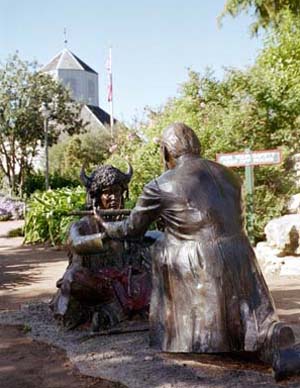
In 1846 Meusebach founded the town of Friedrichsburg, Fredericksburg, named after Prince Frederick of Prussia, an influential member of the society. His greatest historical achievement was to negotiate a peace treaty with the Comanche, signed at Fredericksburg on 9 May 1847: the Germans bought hides and food from the Indians, while the Indians refrained from raiding the German settlements. What makes this treaty unique is that neither side ever broke it. Fredericksburg still commemorates its founding with Founders Day, held on the Saturday closest to 8 May.
In the long run the Adelsverein was entirely overwhelmed by the practical side of its aims, not least because it ran out of money after only a few years. On 23 February 1848 it formally dissolved itself, and on 6 May 1848 the administration of its assets and debts passed to the Deutsche Colonisationsgesellschaft für Texas in Biebrich. In Texas the German Emigration Company carried on the business. Although the Texas venture thus ended in fiasco for the society, a flourishing landscape of settlements grew over the years around New Braunfels and Fredericksburg, and for the emigrants it did become a new home after all. Meusebach himself was elected to the Senate of the state of Texas in 1851, where he represented Bexar, Comal and Medina counties.
The Germans of this region contributed a great deal to the development of Texas. Both towns were flourishing within a short time and became centres of German life in the United States. Around the turn of the twentieth century some 100,000 Texans still spoke German, most of them in central Texas between Austin and San Antonio. The German Belt of Texas exists to this day, where people speak what is called Fredericksburg German, and Texan English is still strongly marked by German influence.
… that the famous Route 66 ran "only" from Chicago to Los Angeles?
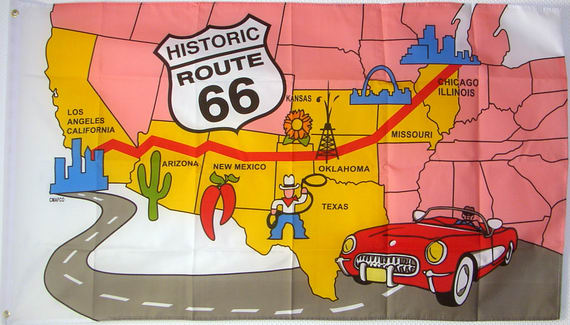
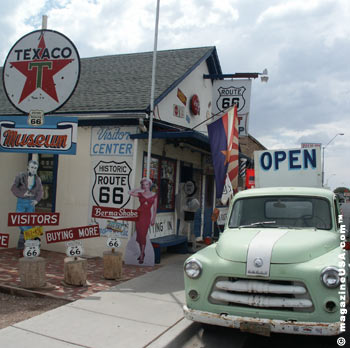
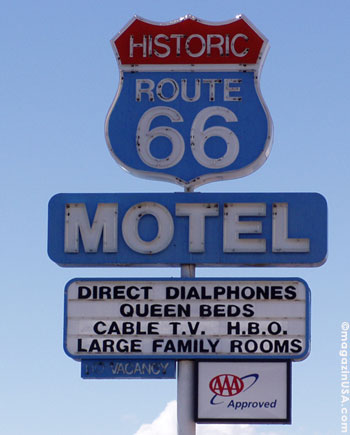

The Mother Road did not run from coast to coast, nor was it the first great east-west highway in the United States; that was the Lincoln Highway conceived in 1913, which began at Times Square in New York and ended at Lincoln Park in San Francisco. Even so, Route 66, established on 11 November 1926 as part of the first American federal highway system, running from Lake Michigan in Chicago to the Pacific at Los Angeles over 2,448 miles, became the symbol of America setting out into the age of the automobile. It linked the industrial region of the Great Lakes with the oil fields of Oklahoma and the rising south of California.
It shaped the United States as few other roads have, although the paving of the whole route was completed only in 1938. Franchising spread along it as a business model, and in San Bernardino, a city on Route 66, the McDonald brothers opened their first fast-food restaurant. Towns along the road flourished and then decayed once it had to give way to the freeways. From 1950 onwards it was replaced piece by piece by the four-lane interstates. On 27 June 1985 US 66 officially disappeared from the federal highway system.
It lives on in film and in music, and several Route 66 associations work to preserve as much of the original road as possible. Around 85 per cent of it can still be driven today, though under other route numbers. For the centenary of its establishment Congress has set up a Route 66 Centennial Commission.
… that a German revolutionary became Secretary of the Interior of the United States?
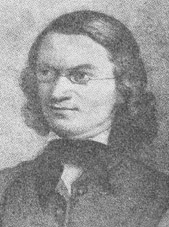
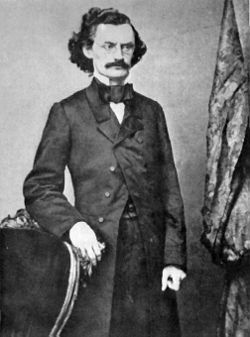
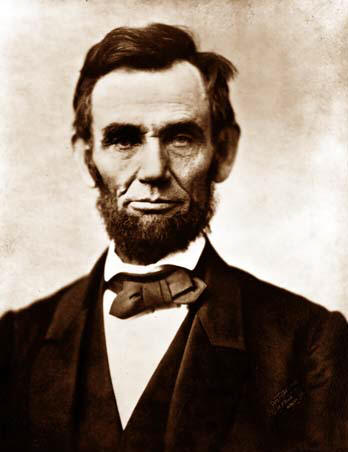
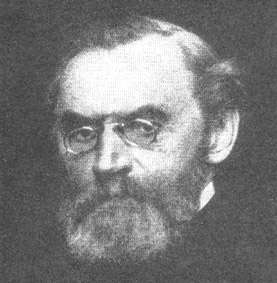
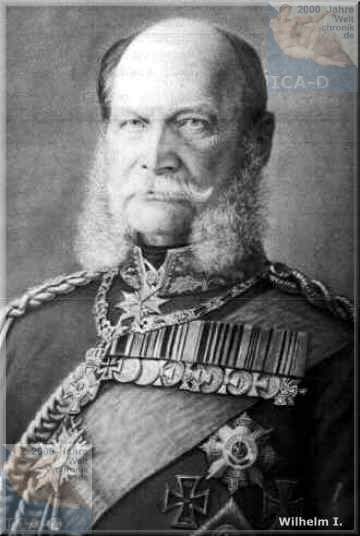
As a nineteen-year-old student of history, Carl Schurz demonstrates in Bonn in the revolutionary year of 1848 for freedom and national unity. A year later he is fighting in the Palatinate and in Baden against the advancing Prussian troops in defence of the constitution drawn up at the Paulskirche; in July 1849 he is trapped in the besieged fortress of Rastatt and escapes through a sewer. He flees to Switzerland, returns to Germany in secret and, on the night of 6 to 7 November 1850, frees his Bonn professor Gottfried Kinkel, sentenced by the victorious Prussians to life imprisonment, from the penitentiary at Spandau in a spectacular operation, then flees to London. In 1852 he turns his back on reactionary Europe, married by now and disappointed like many other veterans of 1848, and emigrates to the United States, living at first in Philadelphia and settling in Watertown, Wisconsin, in 1855.
He soon joins the young Republican Party and, under the influence of Lincoln, whom he comes to know personally, becomes an opponent of slavery and eventually one of the influential "black Republicans". In many lectures and speeches across the country he seeks above all to win German Americans over to Lincoln's politics. After Lincoln's election victory of 1860 he serves briefly as American minister to Spain and secures Spanish neutrality in the coming Civil War. Back in the United States he immediately asks for high military rank in the Union army and is promoted to major general in 1863, thanks to his good contacts with the White House and despite considerable resistance in the army leadership.
In private life he has little success at first with real estate; that changes only when he is offered a share in the editorship of the German-language Westliche Post in St. Louis in 1867. During the winter of 1867 and 1868 Schurz visits Germany and is received in Berlin by Otto von Bismarck. Like more than one middle-class fighter for freedom, Schurz is impressed by the success of Bismarck's politics. He too changes his own political views, elected senator for Missouri in 1868 and serving from 1869 to 1875; he breaks with the Republicans and tries to found a new party, the Liberal Republican Party. He fails, sees himself thereafter as an independent, and sides now with the Republicans, now with the Democrats. In 1872 he visits Germany with his family; the new empire impresses him, although its booming nationalism puts him off.
In 1876 he supports the candidacy of the Republican R. B. Hayes and is appointed Secretary of the Interior after his victory. He does not handle the office well. Hayes declines to run again in 1880, and with the inauguration of his successor Carl Schurz's term ends in March 1881. The revolutionary of former days keeps a patriotic feeling for his old homeland; already in the Franco-Prussian War of 1870 and 1871 he had taken the German side without reservation and celebrated the German victory by hanging the black, white and red flag from his newspaper building in St. Louis. When Wilhelm I dies in 1888, the very prince who had once wanted the young freedom fighter shot in Baden, Schurz devotes a lengthy obituary to him praising the emperor's national deeds. As a man of nearly seventy he agitates fiercely against every imperialist ambition and against American attempts to build a colonial empire. When the government provokes war with colonial Spain in 1898, he accuses it of waging that campaign "in the name of liberty and humanity" while its real purpose is self-enrichment. He dies in New York on 14 May 1906. President Theodore Roosevelt and Emperor Wilhelm II send condolences, and Mark Twain writes an obituary.
… what the Muhlenberg legend is?
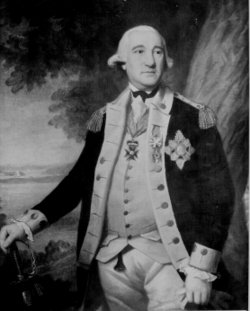


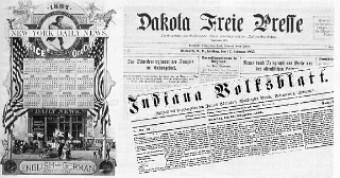
For two hundred years a legend has persisted that German came within a hair of becoming the official language of the United States. A bill to that effect is said to have failed by a single vote. The man who decided the matter in favour of English is said to have been of German descent himself.
The fact is that no vote on the official language of the United States has ever taken place, not even at regional level. Yet like all legends this one has a kernel of truth. In 1794 a group of German immigrants from Augusta County in Virginia submitted a petition to the House of Representatives asking for laws to be published in German translation. This was meant to help immigrants who had not yet learned English to find their way among the laws of their new home more quickly. A committee then recommended printing 3,000 sets of the laws in German. When the House considered the recommendation on 13 January 1795, a motion to adjourn the debate and resume it later failed by 42 votes to 41. On 16 February 1795 the House resolved to have the laws printed in English alone. What part the German-born, bilingual Speaker of the House, Frederick Augustus Conrad Muehlenberg, played in this cannot be determined, since no roll call of that vote survives. All that survives is the remark attributed to him, that the sooner the Germans became Americans, the better.
This left the German settlers with a certain bitterness that provided the soil for the legend which arose a generation later and became famous as the Muhlenberg legend: in 1828, so the rumour went, Pennsylvania had voted on whether German should become a second official language alongside English. The motion was said to have been defeated by a single vote, and that decisive vote was said to have been cast by the German-born Speaker Muhlenberg himself. In this form the legend goes back to Franz von Löher, who in 1847 moved the vote to Pennsylvania.
So much for the legend. Germans did make up a considerable part of the population of the state of Pennsylvania at the beginning of the nineteenth century, though no more than a third. Measured against the population of the United States as a whole, the share of German immigrants around 1830 was a mere nine per cent. Even so, a great many German words have found their way into American English, among them "muesli", "reinheitsgebot" and "weltschmerz", and new ones keep arriving, such as "fahrvergnügen" or "bremsstrahlung".
… since when American presidents have been limited to two terms?
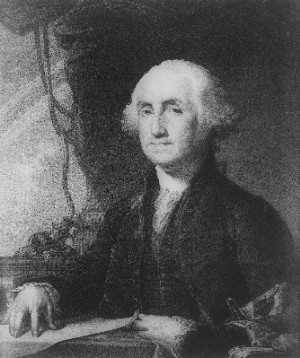
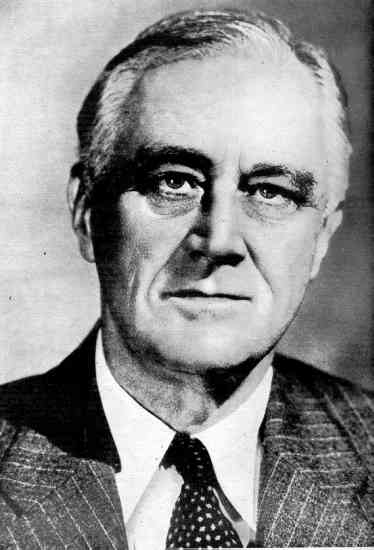
It is true that George Washington, the first President of the United States, served only two terms, declined a third election and thus established a tradition of two terms. But in all the years that followed nothing was ever laid down in law about the number of terms an American president might serve. It was therefore entirely legal for Franklin D. Roosevelt to be elected president four times, in 1932, 1936, 1940 and 1944. This had nothing to do with the Second World War in the sense of some exception being made. At his third election in 1940 the United States was not yet at war. On the contrary, during the campaign against the Republican Willkie, Roosevelt had even promised in so many words that American boys would not be sent into any foreign war.
At the congressional elections of November 1946, by which time Harry S. Truman, vice president since 1944, had become president after the death of Franklin D. Roosevelt in April 1945, the Republicans in opposition won a landslide and gained a majority in both houses for the first time since 1930. Still smarting from the long occupation of the White House by the Democrat Roosevelt, this Congress passed the Twenty-Second Amendment on 21 March 1947, under which future presidents may serve no more than two terms. The sitting President Harry S. Truman was expressly exempted. Ratification by the states was completed on 27 February 1951.
… that the first permanent English colony in North America, Jamestown, was established in 1607?
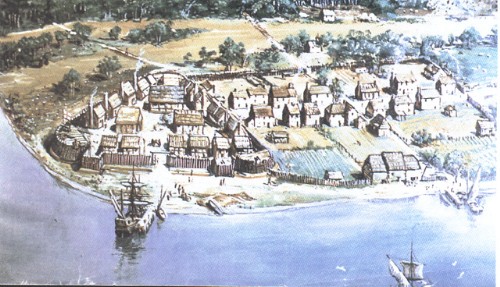
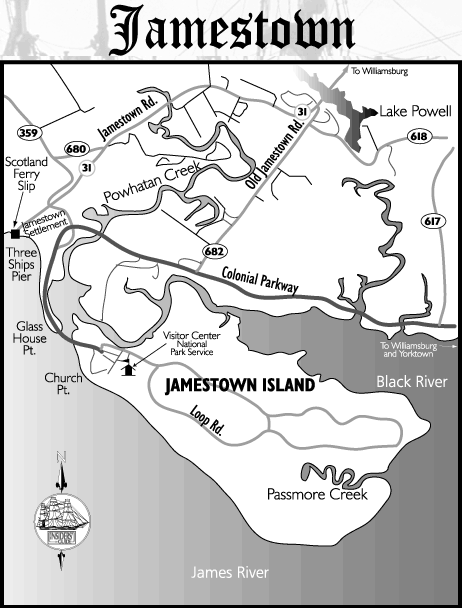
Between 1585 and 1587 Sir Walter Raleigh, holding a patent from Queen Elizabeth I, made several attempts to found a colony on Roanoke Island off the coast of what is now North Carolina. The threat to England from the Spanish Armada, which lasted until 1588, was one reason among others why this first colony could not be supplied regularly from home. A relief expedition found the colony deserted in 1590. The fate of this "lost colony" and its people has never been established. England learned two things from the disaster: that no single person could raise sufficient means to finance such undertakings, and that reliable supply from England was absolutely essential for colonists.
In 1606 James I granted two groups of merchants, the London Company and the Plymouth Company, a licence to colonise North America between the 34th and 45th parallels. Both groups had purely commercial interests and hoped, through trading posts, to import furs and other valuable raw materials to England. The first attempts by the Plymouth Company on the coast of present-day Maine failed. The London Company, after some setbacks, succeeded further south: on 26 April 1607 the three ships Discovery, Godspeed and Susan Constant landed 104 men and boys on the southern shore of Chesapeake Bay. Having named the place Cape Henry, they continued their exploration into a broad river mouth. On 13 May 1607 they took up the site they named Jamestown in honour of their king, and called the river the James River. Several hundred settlers followed these first colonists over the next two years.
The colony was in serious trouble from the start; the climate, internal quarrels and a lack of farming threatened to sink it. Hunger and disease killed more than three quarters of the settlers during the winter of 1609 and 1610, known as the Starving Time; when relief arrived in May 1610 about 60 people were still alive. Only continuous supply from England, together with the vigorous and disciplined leadership of Captain John Smith and Sir Thomas Dale, kept the colony alive. Some years later it was found that tobacco grew particularly well there, which soon led to substantial exports. The colony's stabilisation became visible in 1619, when the parent company, now renamed the Virginia Company, sent shiploads of women to the New World. In the same year, at the company's direction, an elected assembly met to choose a government of its own. This was meant to set the English colonies of North America apart from all the colonies of the other European powers. Yet the colony remained in danger; in 1622 an Indian attack came close to wiping it out. By 1624 the danger had passed; the company went bankrupt and Virginia became a crown colony, with the Crown reluctantly accepting the settlers' right to representation.
The famous Pilgrim Fathers, by contrast, reached Cape Cod only in November 1620 and went ashore at Plymouth in December 1620.
… that the Battle of the Little Bighorn in 1876 was not the last victory of Indian forces?
On 25 June 1876, a hot summer's day, Lakota, Dakota, Cheyenne and Arapaho decisively defeated a cavalry regiment of the US Army at the Little Bighorn in Montana. The mounted warriors were led by Crazy Horse and Gall. The 7th Cavalry lost 263 men, among them Lieutenant Colonel George Armstrong Custer, who led the regiment in the field. More than 40 per cent of the regiment had been born abroad, most of them in Ireland or in the German states; among the dead were Germans as well, some of them only recently arrived. During the Civil War Custer had been promoted for exceptional bravery at the age of 23 and became one of the youngest generals in American military history. In the postwar army he led the 7th Cavalry as a lieutenant colonel, but was allowed to keep the title of general.
The nomadic peoples of the plains had gained an advantage over the farming Indian nations through the horse, unknown to them until about 1740 and then called "sunka wakan", the dog beyond understanding, and through the bison hunt that the horse transformed. Now these peoples had lost their standing as independent nations by decree from Washington, the days of the bison hunt were over, and land promised to them earlier was to be given up.
The tribes moving through Montana and Dakota were to be brought onto reservations by three armies in a large-scale operation known as the Centennial Campaign. Custer's 7th US Cavalry, with 600 men, was only the advance force. Convinced that no Indian force could withstand his troops, he decided to attack a large encampment at once. Contemporaries spoke of about 7,000 people in that camp, and current scholarship confirms the order of magnitude: the National Park Service assumes around 7,000 people, among them 1,500 to 2,000 warriors. Custer divided his force; Major Reno and he himself were to attack the camp from different sides. After Reno's troops had first been driven off with heavy losses, Custer, who knew nothing of this, was attacked from the rear and his command wiped out. The famous chief Sitting Bull was also camped at the Little Bighorn, but probably took no part in the fighting himself.
News of this defeat of a US Army unit struck contemporaries much as the Japanese attack on Pearl Harbor or the attacks of 11 September 2001 struck later generations. Custer was later exhumed and buried with honours at the West Point military academy in 1877. On 29 December 1890 soldiers of the 7th Cavalry, Custer's old regiment, surrounded the group of the Lakota chief Big Foot at Wounded Knee, some 350 people in all. Why the shooting began was never established. More than 250 Lakota were killed, possibly as many as 300, most of them women and children; 25 soldiers died. Wounded Knee is regarded as the last chapter of the Indian wars on the plains. The Little Bighorn, however, was not the last victory of Indian forces: on 17 June 1877 the Nez Perce defeated an army detachment in White Bird Canyon, leaving 34 soldiers dead without losing a single man of their own.
… how America got its name?
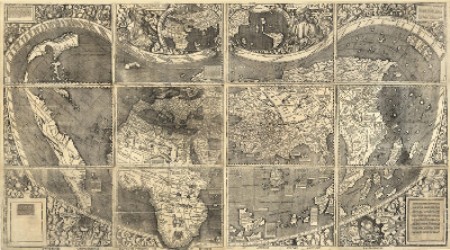
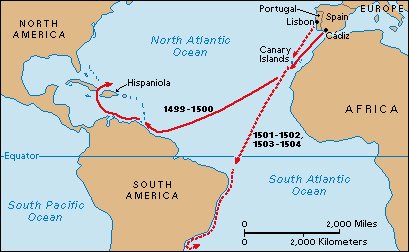
The double continent would not bear its name without a German cartographer. In 1507 Martin Waldseemüller, born around 1470 in Wolfenweiler near Freiburg and died on 16 March 1520 in Saint-Dié, called the new world "America" for the first time, in a work of three parts: a large world map, a set of globe gores and, together with Matthias Ringmann, the treatise "Cosmographiae introductio". Waldseemüller had heard of the voyages of the Italian navigator Amerigo Vespucci, which around 1500 took him along the east coast of what is now South America. Following the Latin form of the explorer's name, and without Vespucci's knowledge, Waldseemüller called the region the land of Americus, "America" for short. The wide circulation of the map helped the name become current for the whole double continent. Waldseemüller himself dropped the term on later maps and called the continent "terra incognita" after hearing of the voyages of Christopher Columbus, who had landed in America some years before Vespucci.
In 1901 a copy of the roughly 1,000 world maps originally printed was rediscovered at Wolfegg Castle in Baden-Württemberg. It is the only one that survives. In 2001 the House of Waldburg-Wolfegg and the Library of Congress in Washington agreed on a sale, which was completed in 2003 for 10 million dollars. The map was handed over on 30 April 2007 by Chancellor Angela Merkel. Five copies of the globe gores are known, the most recent discovered in 2012 in the university library of Munich.
… that Wyatt Earp was neither sheriff nor town marshal in Tombstone?
The truth is that Wyatt Earp applied several times in various towns of the West for the post of sheriff and was turned down each time, most recently in February 1881 in the newly formed Cochise County, where Johnny Behan got the job. He was not entirely without office, however: in 1880 he served as deputy sheriff of Pima County for the Tombstone district, and after the attempt on the life of his brother Virgil at the end of 1881 he became a deputy U. S. marshal. Alongside this he ran saloon businesses. In 1928, shortly before his death, he told a writer about his life. That writer made him a legend of the Wild West after his death.
At the core of the legend lies a true event. On 26 October 1881 a gunfight took place on a narrow lot on Fremont Street beside Fly's boarding house, not far from the rear entrance of the OK Corral. On one side stood Town Marshal Virgil Earp, his brothers Wyatt and Morgan and the consumptive gunman Doc Holliday, all of whom Virgil Earp had deputised for the occasion; on the other stood five cowboys. At the end Billy Clanton and Frank and Tom McLaury lay dead. Around 30 shots were fired and the whole thing lasted barely half a minute. The scene has figured in more than 200 films and television productions, at the centre of the story or at its edge.
Tombstone today has a little over 1,000 inhabitants, many of them living from tourism. The gunfight is re-enacted three times a day, and visitors stroll through "The Town Too Tough to Die", as the advertising has it.
… that the first crossing of North America by Americans was completed in 1806?
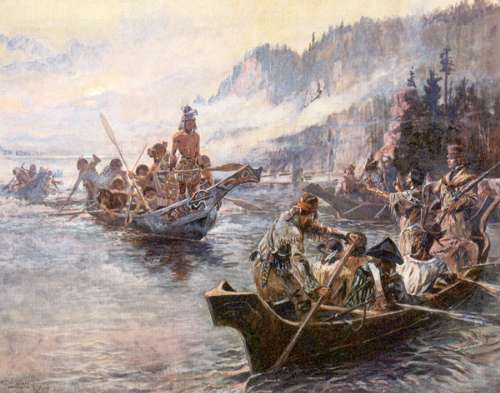
On 23 September 1806 an expedition under Meriwether Lewis and William Clark returned to St. Louis, from where it had set out a good two and a half years earlier. Until the Louisiana Purchase of 1803 under President Thomas Jefferson, the Mississippi formed the western border of the young United States. For 15 million dollars the United States bought from France about 828,000 square miles west of the Mississippi, including the strategically vital New Orleans. The treaty left the boundaries of the territory open; in the west it reached the crest of the Rocky Mountains, and the northern boundary was fixed at the 49th parallel only in 1818. The purchase doubled the national territory and sharpened the government's interest in the west, where the hope of finding a water route to the Pacific stood in the foreground at first.
On Jefferson's initiative an expedition set out on 14 May 1804 under his former private secretary Meriwether Lewis and Lieutenant William Clark from the winter quarters at Camp Dubois, opposite the mouth of the Missouri near St. Louis; the formal send-off followed on 21 May at St. Charles. The party followed the Missouri to its source and found that the Rocky Mountains were far larger than assumed and that a continuous water route to the Pacific would remain an illusion. After crossing the Rockies the expedition followed the Snake and the Columbia. On 7 November 1805 Clark noted "Ocian in view", though he was in fact still looking at the estuary of the Columbia; the party reached the Pacific coast about two weeks later. It spent the winter from 10 December 1805 at Fort Clatsop.
The expedition brought the United States a wealth of new information about landscape, flora and fauna and about the Indians of the west, and for that reason among others it caused a great stir. The Lewis and Clark expedition and its results contributed decisively to the American drive to conquer and settle the west over the following decades. Westward Ho! The Scot Alexander Mackenzie had already crossed the continent north of Mexico in 1793.
… that the designer of the world-famous Brooklyn Bridge was born in 1806 in Mühlhausen in Thuringia?
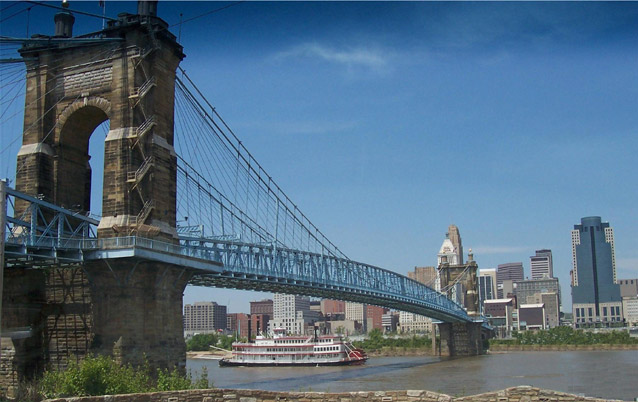
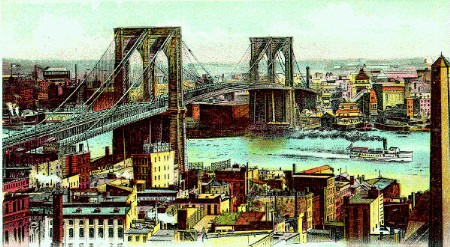
Johann August Röbling was born on 12 June 1806 in Mühlhausen, then part of Prussia. He studied at the Berlin Building Academy and qualified as a civil engineer in 1826 at the age of 20. During his studies he came across the new technical fashion of suspension and chain bridges. He then spent three years in the Prussian civil service. In 1831 he emigrated to the United States together with his brother Karl. In 1837 he received American citizenship in Harrisburg, his name now spelled Roebling; his son Washington was born in the same year. From 1841 he developed twisted wire rope and patented it in 1843. Production began at Saxonburg in Pennsylvania and moved to Trenton, New Jersey, in 1849. Under his sons it grew into one of the largest wire rope works in the world.
His first striking commission as a bridge builder came in 1844 and 1845, replacing the wooden aqueduct that carried the Pennsylvania Canal across the Allegheny River at Pittsburgh with a suspension structure. From 1851 to 1855 a railway bridge over the Niagara gorge followed, a few miles below the falls.
From September 1856 Roebling built the bridge over the Ohio River between Cincinnati and Covington. Financial problems and the Civil War delayed the work; in 1858 it stopped altogether and resumed in 1863. On 1 December 1866 the bridge opened to pedestrians and on 1 January 1867 to all other traffic. With a main span of 322 metres it had the longest span in the world at the time and was celebrated accordingly by the American press. It is often called the little sister of the project that followed, the Brooklyn Bridge, and the resemblance is indeed striking.
For that bridge over the East River, meant to link New York with the then still independent city of Brooklyn, Roebling first had to win over many sceptics. A suspension bridge on that scale would simply collapse, it would not withstand the wind, it was too expensive and too long, and nobody would walk half a kilometre of bridge. The main span measures 486 metres. In 1869 Roebling's plans were approved and survey work began. On 28 June 1869, while surveying at a landing on the East River, his foot was crushed by an arriving boat. His toes were amputated, but he contracted tetanus and died on 22 July 1869.
His son Washington took over as chief engineer. After Washington fell ill with caisson disease while working in the pressurised chambers and was largely confined to his house, his wife Emily Warren Roebling took over much of the work on site. She acquired the necessary technical knowledge, carried her husband's instructions to the workmen, handled the correspondence and represented the family in public. The Brooklyn Bridge opened in 1883.
… that Benjamin Franklin concluded a treaty of amity and commerce with Prussia for the young United States in 1785?
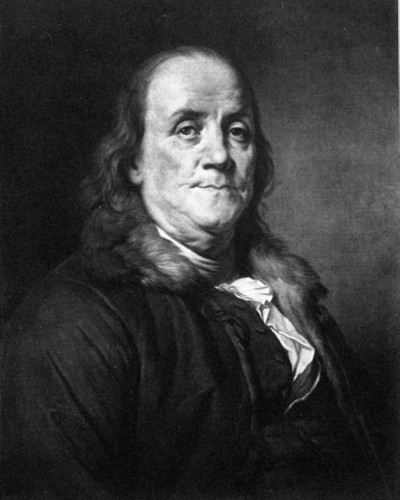
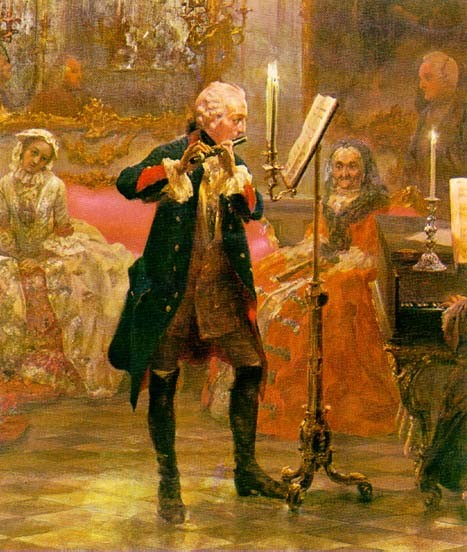
Benjamin Franklin was one of three American plenipotentiaries for the first treaty of amity and commerce between the United States and a German state. It was not signed in a single joint ceremony but one after another in different places: Franklin on 9 July 1785 at Passy near Paris, Thomas Jefferson on 28 July 1785 in Paris and John Adams on 5 August 1785 in London. For Prussia the envoy Baron Friedrich Wilhelm von Thulemeier added his signature on 10 September 1785 in The Hague, and Frederick the Great ratified it on 24 September 1785. Franklin therefore signed shortly before leaving France; by the time Prussia signed he was already on his way to America.
Franklin, born on 17 January 1706, had a particular relationship with Germans all his life. In 1732 he published the "Philadelphische Zeitung" in Philadelphia, the first German-language newspaper in North America. He also voiced concern about the strong growth of the German-descended population of Pennsylvania. In his 1751 essay "Observations Concerning the Increase of Mankind" he wrote that the newcomers would shortly be so numerous "as to Germanize us instead of our Anglifying them, and will never adopt our Language or Customs, any more than they can acquire our Complexion". Here Benjamin Franklin was mistaken.
… that in the nineteenth century New York City was the third largest German-speaking city in the world, after Berlin and Vienna?
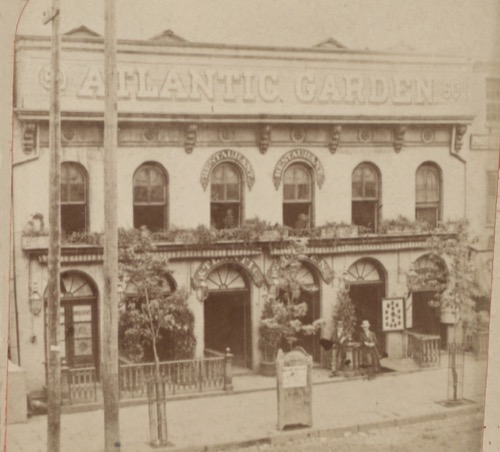
New York was a principal destination of German emigration in the nineteenth century, especially after the revolution of 1848. The immigrants settled above all east of the Bowery on the Lower East Side, in the area of today's East Village, which reached north as far as 14th Street. The quarter became known as Kleindeutschland or Little Germany and was for a time the largest German-speaking community outside Berlin and Vienna. In the 1870s more than 60,000 Germans lived there, with churches, clubs, theatres, bookshops, gymnasiums and beer halls of their own.
Even before the turn of the century many German families moved further north, preferring Yorkville, which stretches from 79th to 96th Street and from the East River to 3rd Avenue. The elevated railways on 2nd and 3rd Avenue improved transport and made the quarter more attractive to newly arriving German emigrants. In 1898 the New York Turn Verein moved its headquarters there as well.
The end of Kleindeutschland came on 15 June 1904. St. Mark's parish on East 6th Street had chartered the paddle steamer General Slocum for its parish outing. Fire broke out on board as the ship made its way up the East River; more than a thousand people died, most of them women and children from the neighbourhood. The exodus had long been under way, but after the disaster it accelerated so sharply that by the census of 1910 only a handful of German families remained in Kleindeutschland.
The First World War then changed everything for the Germans of New York; many changed their names to underline that they were particularly good Americans. Yorkville remained a German quarter through the 1920s and 1930s, though in the 1930s supporters of Hitler came to play an ever more dominant role there, so that many of those now leaving Nazi Germany, and German Jews in particular, no longer saw Yorkville as their first port of call. After the Second World War little was left of German Yorkville beyond a few restaurants.
… how the story of the first flag of the United States came about?
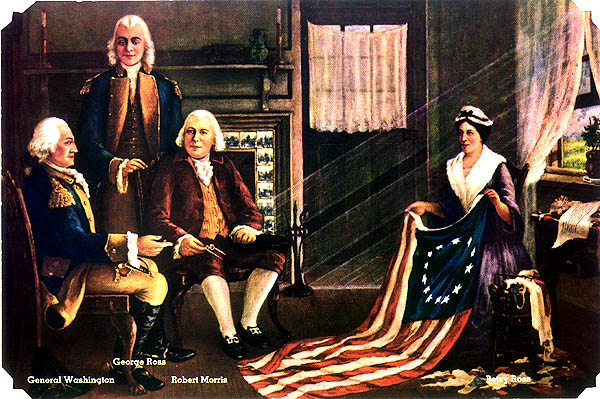
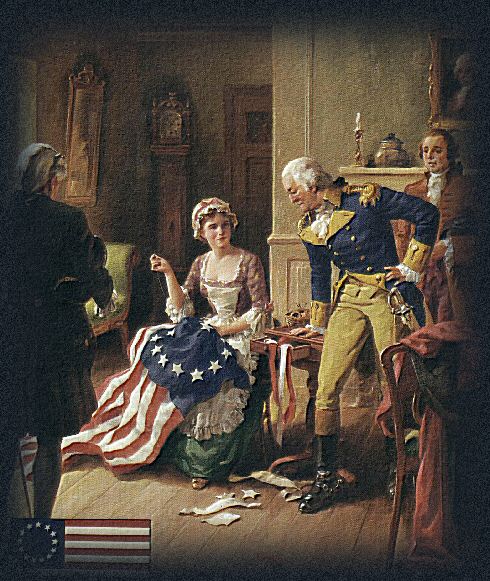
Elizabeth "Betsy" Griscom was born in Philadelphia on 1 January 1752. After her schooling she was apprenticed to an upholsterer. In 1773 she married John Ross and was already a widow when, as the story goes, she is said to have had that meeting in the spring of 1776 with a committee of the Continental Congress from which the first American flag emerged: with George Washington, commander of the Continental Army, with George Ross, the uncle of her late husband, and with Robert Morris. Washington is said to have shown her a rough design with six-pointed stars, whereupon she demonstrated how a five-pointed star can be made with a single cut of the scissors.
The story is not documented. It became known only in 1870, when Betsy Ross's grandson William Canby presented it to the Historical Society of Pennsylvania and other family members confirmed it under oath. No written testimony from the period itself exists, and historians today treat the account as family tradition. What is certain is that Betsy Ross worked as an upholsterer and seamstress and made flags for decades; on 29 May 1777 she received a payment from the Pennsylvania Navy Board for such work.
On 8 July 1776 the Stars and Stripes cannot yet have been flying. On that day John Nixon read the Declaration of Independence in public for the first time, in the yard of the State House. The Continental Congress adopted the star-spangled flag only on 14 June 1777: the flag was to have thirteen alternating red and white stripes and thirteen white stars on a blue field, representing a new constellation. How the stars were to be arranged the resolution did not say. Several patterns were in use; the circular arrangement, in which no colony appears raised above another, belongs to the Betsy Ross tradition.
The often quoted reading of the colours refers not to the flag but to the Great Seal of the United States. Charles Thomson, secretary of the Continental Congress, wrote in his explanation adopted on 20 June 1782 that the colours of the shield were those of the flag: white for purity and innocence, red for hardiness and valour, and blue for vigilance, perseverance and justice. There is no official interpretation of the colours of the flag itself to this day. The explanation attributed to George Washington, that the stars were taken from the sky, the red from the British colours and the white stripes stand for separation from the mother country, has no contemporary source either.
The thirteen stars stand for the thirteen founding states: Delaware, Pennsylvania, New Jersey, Georgia, Connecticut, Massachusetts, Maryland, South Carolina, New Hampshire, Virginia, New York, North Carolina and Rhode Island.
After the death of John Ross, Betsy Ross married twice more, Joseph Ashburn in 1777 and, after his death, John Claypoole. She kept her workshop going until the age of 76 and died on 30 January 1836 at the age of 84.
Join in Mitreden
Do you know something that is missing here?
This collection is never finished. If you know an episode between Germany and America that is not here yet, write to us at info@dag-muenster.de. We will follow it up and add it if it holds up.
The questions come from the DAG's own archive. For this edition every answer was checked once more against present-day sources. If you send us a suggestion, do tell us where you have it from.